BEIJING, Dec. 16, 2025 /PRNewswire/ -- A news report from China Daily:
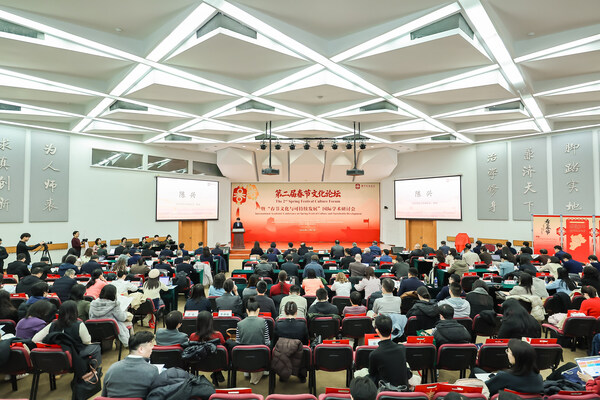
The second Spring Festival Culture Forum is held in Beijing from Dec 7 to 8.
Spring Festival is emerging as a vital force in fostering cultural confidence and dialogue among world civilizations, as its core values of harmony, inclusivity and ecological wisdom resonate with global sustainable development goals, officials and experts said.
"Spring Festival stands as the most extensively celebrated and profoundly meaningful traditional festival for the Chinese nation. It not only embodies the spiritual pursuit of harmony inherent in the Chinese people, but also represents the universal values of family unity, social inclusiveness and harmonious coexistence between humanity and nature," Chen Xing, vice-president of Beijing Normal University, said at the second Spring Festival Culture Forum held in Beijing in early December.
Revolving around Spring Festival culture and sustainable development, the forum gathered representatives from universities and cultural institutions at home and abroad to hold in-depth discussions on topics such as the implementation and safeguarding of intangible cultural heritage, cultural exchange and mutual learning, as well as the preservation of intangible cultural heritage and sustainable development.
On Dec 4, 2024, Spring Festival, the social practice of celebrating the traditional Chinese New Year, was inscribed on UNESCO's Representative List of the Intangible Cultural Heritage of Humanity. As the most widely observed and significant traditional festival of the Chinese nation, Spring Festival has now become a shared cultural heritage for all humanity.
"The inscription of Spring Festival on the Representative List of the Intangible Cultural Heritage of Humanity showcases to the world the enduring cultural heritage, distinctive aesthetic pursuits, the value of living traditions and the deeply ingrained cultural DNA of the Chinese nation," said Li Xiaosong, deputy director-general of the department of intangible cultural heritage at the Ministry of Culture and Tourism.
"Since the festival belongs to the people, it is essential to strengthen its connection with everyday life, ensuring that this traditional celebration remains vibrant and relevant in contemporary society," Li said.
Rong Shuqin, secretary-general of the China Folk Literature and Art Association, noted that the forum holds meaning in multiple aspects. These include celebrating the anniversary of Spring Festival's inscription as an intangible cultural heritage, exploring how traditional festivals can highlight humanistic values and strengthen interpersonal bonds in the era of digitalization and artificial intelligence, and reflecting on how Spring Festival can contribute to socioeconomic development.
By fostering cross-sector integration and the participation of stakeholders, the festival can drive the creative transformation and innovative development of China's outstanding traditional culture, Rong said.
Shahbaz Khan, director of the UNESCO Regional Office for East Asia, said holding this forum on the anniversary of Spring Festival's inclusion on UNESCO's Representative List of the Intangible Cultural Heritage of Humanity carries meaning. With 44 UNESCO intangible cultural heritage items, China ranks first in the world: a testament to its steadfast commitment to safeguarding intangible cultural heritage.
"Spring Festival serves as a vital window into understanding the wisdom of Chinese culture and its connection to world civilizations," Khan said.
Khan noted the concepts emphasized in Spring Festival practices — such as renewal, respect for nature, and intergenerational heritage — align with the United Nations Sustainable Development Goals, providing a cultural foundation for inclusive and resilient global development.
It is hoped that this forum can build consensus and join forces to safeguard humanity's living heritage, contributing to a more peaceful, inclusive and sustainable world, he added.
During the forum, the department of intangible cultural heritage at the School of Sociology of the BNU was inaugurated. Its establishment aims to address the contemporary imperatives of intangible cultural heritage protection and sustainable development. Through better scientific documentation, academic research and innovative transmission, the department seeks to provide robust theoretical support and a talent pipeline for intangible cultural heritage causes, including Spring Festival.
"Traditional festivals represent the essence of Chinese culture and serve as a crucial vessel for the nation's spirit. They carry multiple dimensions of value: ecological value in harmonizing with nature; historical and cultural significance in honoring ancestry and tradition; social value in reinforcing and transmitting family ethics; and communal value in strengthening social cohesion and identity, as well as personal value in balancing body and mind," said Xiao Fang, head of the department of intangible cultural heritage at the School of Sociology of the BNU.
Xiao emphasized that traditional festivals remain relevant in contemporary times and should be renewed in the process of transmission, providing nourishment for the cultural roots of the Chinese nation, safeguarding its spiritual core and enhancing cultural confidence.
During the forum, six parallel subforums were held, where participants engaged in discussions on Spring Festival-focused topics. These included the historical evolution and contemporary expression of the festival; its local practices and cultural diversity; the culture and Chinese national identity; the festival in the era of policies, practices and diverse communities; overseas transmission of festival culture; and the community with a shared future for humanity and its role in international Chinese language education.
Additionally, a cultural knowledge exhibition themed "Seeing Spring Festival" was held concurrently. The event featured live demonstrations and interactive experiences by a student drum society from the BNU, as well as inheritors of intangible cultural heritage such as Chinese paper-cutting and calligraphy.
Cohosted by the BNU, the China Intangible Cultural Heritage Museum and the China Folk Literature and Art Association, this year's Spring Festival Culture Forum was elevated to an international academic symposium. It represents a high-level scholarly event convened on the anniversary of the festival's inscription on UNESCO's Representative List of the Intangible Cultural Heritage of Humanity.