 |
MONTREAL, Dec. 15, 2025 /PRNewswire/ -- December 15, 2025 – SYDNEY, Australia
Highlights
Darren L. Smith, Executive Vice President Exploration, comments: "The 2025 drill campaign at Shaakichiuwaanaan was expansive in scope and completed amongst a backdrop of two (2) Mineral Resource Estimate updates and a maiden Feasibility Study for lithium on the CV5 Pegmatite. The campaign included drill testing of new targets, infill and step-out holes proximal to defined Li-Cs-Ta Mineral Resources, as well as condemnation and geomechanical holes in support of development. I am happy to report that, through the teams' efforts, the Company achieved its key drilling objectives on schedule and under budget with the Project now further derisked towards development as well as multiple new high-potential lithium and caesium zones discovered."
"The emergence of caesium-rich mineralization across multiple areas of the Property underscores the robustness and highly evolved nature of the LCT Pegmatite system at Shaakichiuwaanaan. The presence of such high-value mineralization strengthens our confidence in the broader system and its ability to continue generating discoveries at scale that have the potential to enhance long-term shareholder value." added Mr. Smith.
PMET Resources Inc. (the "Company" or "PMET") (TSX: PMET) (ASX: PMT) (OTCQX: PMETF) (FSE: R9GA) is pleased to announce results from its extensive 2025 drill campaign at the Company's wholly-owned Shaakichiuwaanaan Property (the "Property" or "Project"), located in the Eeyou Istchee James Bay region of Quebec.
The Property hosts one of the largest pegmatite Mineral Resources1 (Li, Cs, Ta) and Mineral Reserves2 (Li) in the world, situated approximately 13 km south of the regional and all–weather Trans-Taiga Road and powerline infrastructure corridor, and is accessible year-round by road. The Company recently announced a robust Feasibility Study for the CV5 Pegmatite, which outlined the Project as a potential North American critical mineral powerhouse (see news release dated October 20, 2025).
The 2025 drill campaign at the Property was expansive in nature and included drill testing of multiple Li-Cs-Ta ("LCT") pegmatite prospects (CV4, CV8, CV12), step-out drilling at CV5 and CV13, infill drilling at CV13, as well as condemnation and geomechanical drilling in support of development at CV5 and CV13, respectively. Over the course of the campaign, which was concluded in October, a total of 57,024 m (245 holes) of diamond drilling was completed, of which, results for 41,943 m (173 holes) are reported herein (see Figure 1, and Table 1 through Table 7).
__________________________________ |
1 The Consolidated MRE (CV5 + CV13 pegmatites), which includes the Rigel and Vega caesium zones, totals 108.0 Mt at 1.40% Li2O, 0.11% Cs2O, 166 ppm Ta2O5, and 66 ppm Ga, Indicated, and 33.4 Mt at 1.33% Li2O, 0.21% Cs2O, 155 ppm Ta2O5, and 65 ppm Ga, Inferred, and is reported at a cut-off grade of 0.40% Li2O (open-pit), 0.60% Li2O (underground CV5), and 0.70% Li2O (underground CV13). A grade constraint of 0.50% Cs2O was used to model the Rigel and Vega caesium zones. The Effective Date is June 20, 2025 (through drill hole CV24-787). Mineral Resources are not Mineral Reserves as they do not have demonstrated economic viability. Mineral Resources are inclusive of Mineral Reserves. |
2 Probable Mineral Reserve of 84.3 Mt at 1.26% Li2O at the CV5 Pegmatite with a cut-off grade is 0.40% Li2O (open-pit) and 0.70% Li2O (underground). Underground development and open-pit marginal tonnage containing material above 0.37% Li2O are also included in the statement. The Effective Date is September 11, 2025. See Feasibility Study news release dated October 20, 2025. |
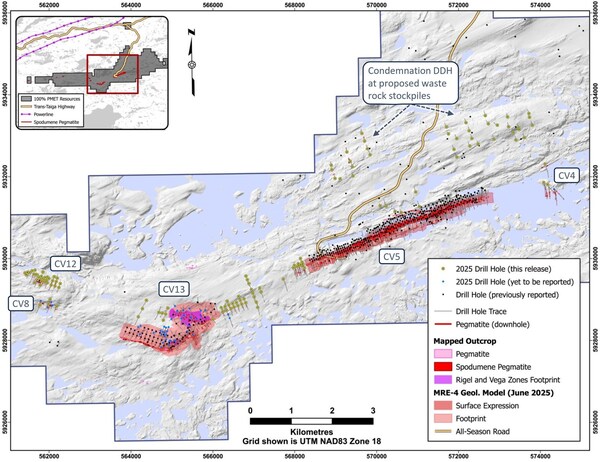
Figure 1: Drill holes completed through 2025 at the Shaakichiuwaanaan Property. (CNW Group/PMET Resources Inc.)
CV4 Pegmatite
The CV4 Pegmatite, characterized at surface by multiple LCT pegmatite outcrops, is situated approximately 1.5 km along geological trend to the east of the CV5 Pegmatite. The 2025 campaign marked the maiden drill testing of the prospect with a total of 7,513 m (17 holes) completed, of which, results for 3,259 m (9 holes) are announced herein (see Figure 2, Table 1, and Table 7).
A drill fence was completed across the interpreted strike of the pegmatite outcrops and then continued south in an effort to intersect a potential extension of the principal pegmatite at CV5. The initial results indicate the outcrops have only limited depth extent; however, the drill fence successfully intersected significant widths of well-mineralized spodumene pegmatite at depth. Drill results include:
A preliminary review of the core indicates that the mineralization style in CV4 drill holes is similar to that of the principal pegmatite at CV5, characterized by large spodumene crystals hosted within a quartz-feldspar pegmatite (Figure 3). The spodumene mineralization consists of off-white to pale-green crystals of centimetre to decimetre scale, which are relatively free of inclusions resembling one of the common spodumene mineralization styles at CV5. This suggests potential amenability to dense media separation ("DMS") process methods, which extensive testwork at CV5 has demonstrated to be very effective.
The discovery is significant and, coupled with down-ice boulder discoveries in the area (see news release dated March 25, 2025) and observations in core, is interpreted to represent a potential 1.5 km extension of the CV5 Pegmatite to the east. As such, the discovery expands potential for additional underground resources along strike of the current underground Mineral Reserves at the CV5 Pegmatite.
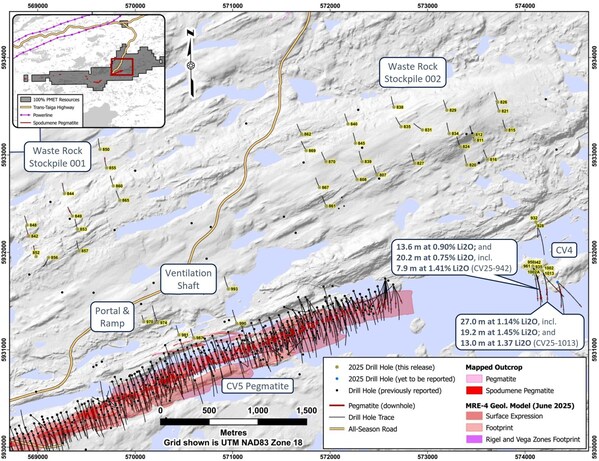
Figure 2: Drill holes completed through 2025 at the CV4 Pegmatite and north of the CV5 Pegmatite (condemnation holes). (CNW Group/PMET Resources Inc.)
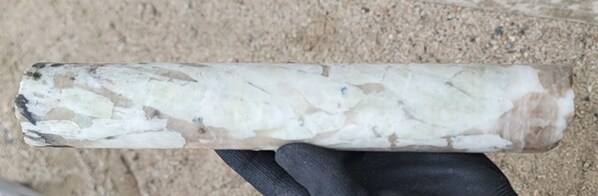
Figure 3: Large spodumene crystals in drill hole CV25-942 at ~351 m depth (core length) at the CV4 Pegmatite. Core graded 1.4 m at 2.22% Li2O over sample interval (350.2 m to 351.6 m). (CNW Group/PMET Resources Inc.)
CV12 Pegmatite
The CV12 Pegmatite, characterized at surface by multiple LCT pegmatite outcrops, is situated approximately 2.4 km along geological trend to the northwest of the CV13 Pegmatite. The 2025 campaign followed up on a single drill hole (2021) at the prospect, with a total 10,102 m (51 holes) completed and all results announced herein (see Figure 4, Table 2, and Table 7).
The drilling was successful, tracing the pegmatite over a strike length of approximately 850 m, with multiple wide and well-mineralized lithium intercepts. Of particular interest are the very high grades in excess of 2.5% Li2O over intervals greater than 10 m obtained in two (2) holes, and which are reminiscent of the high-grade Vega and Nova zones at the CV13 and CV5 pegmatites, respectively. Drill results include:
A preliminary review of the core indicates that the mineralization style in CV12 drill holes is similar to that of the pegmatites at CV13, CV5, and CV4, characterized by large spodumene crystals hosted within a quartz-feldspar pegmatite. The spodumene mineralization consists of off-white to pale-green crystals of centimetre to decimetre scale, which are relatively free of inclusions (Figure 5). This suggests potential amenability to dense media separation ("DMS") process methods, which extensive testwork at CV5 has demonstrated to be very effective. Additionally, grades of tantalum in drill hole at CV12 are very strong (see Table 2).
Additionally, drilling has outlined a new caesium zone discovery at CV12 with intercepts including 3.0 m at 5.82% Cs2O within a wider anomalous zone of 23.0 m at 0.98% Cs2O (CV25-875). Other intercepts include 1.5 m at 3.30% Cs2O (CV25-944), 1.4 m at 1.77% Cs2O (CV25-923), 2.6 m at 1.02% Cs2O (CV25-894), and 4.4 m at 0.90% Cs2O (CV25-902). The caesium mineralization was intercepted at shallow depths (typically <15 to 50 m vertical depth from surface) and has been traced in multiple holes over an approximate 200 m strike length at ~1 to 4 m thickness. Pollucite, the ideal caesium host mineral – due to its high caesium content and ease of recovery – was also visually identified in several drill holes (Figure 6). More drilling is required to constrain the zone; however, its shallow depth, long strike length, and strong grades are very encouraging.
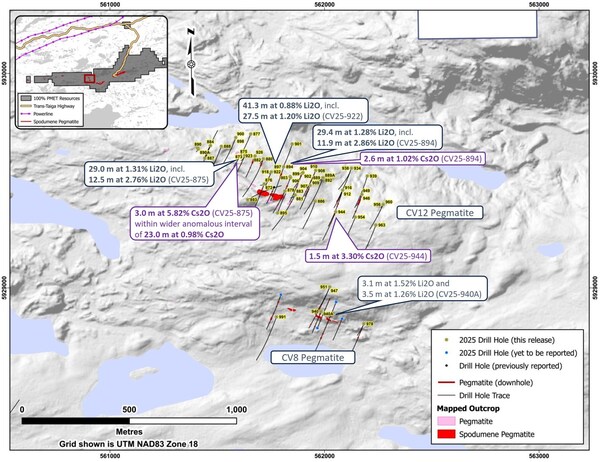
Figure 4: Drill holes completed through 2025 at the CV12 Pegmatite and CV8 Pegmatite. (CNW Group/PMET Resources Inc.)
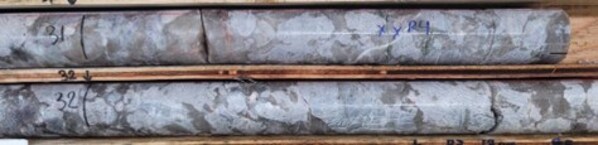
Figure 5: Large spodumene crystals in drill hole CV25-875 at ~32 m depth (core length) at the CV12 Pegmatite. Core graded 2.9 m at 2.70% Li2O over sample interval (30.1 m to 33.0 m). (CNW Group/PMET Resources Inc.)
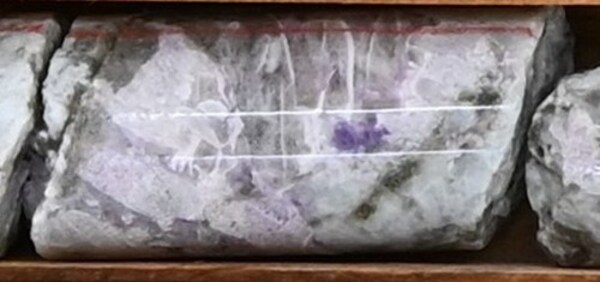
Figure 6: Large crystals of pollucite in drill hole CV25-880 at ~33 m depth (core length) at the CV12 Pegmatite. Core graded 1.5 m at 0.59% Cs2O over sample interval (33.0 m to 34.5 m). (CNW Group/PMET Resources Inc.)
CV13 Pegmatite
The 2025 drilling at the CV13 Pegmatite included infill and step-out holes, and geomechanical drilling in support of development. A total of 23,451 m (106 holes) were completed, of which, results for 9,771 m (59 holes) are announced herein (see Figure 7, Table 3, and Table 7). Assays remain pending for multiple infill and step-out holes at the CV13 Pegmatite, including the high-grade (Li, Cs, Ta) Vega Zone.
The drilling successfully extended the CV13 Pegmatite northeast approximately 0.7 km towards the CV5 Pegmatite with drill intercepts including 14.6 m at 1.04% Li2O (CV25-802), 11.7 m at 1.16% Li2O (CV25-796), and 10.9 m at 1.00% Li2O including a very high-grade zone 2.1 m at 3.95% Li2O (CV25-806). A caesium intercept of 0.9 m at 1.42% Cs2O (CV25-802) was also returned in this area, highlighting the potential for additional caesium enriched lenses to be delineated at CV13. The strike-length of the CV13 Pegmatite now extends approximately 3.2 km and remains open in several directions.
A roughly 100-150 m spaced drill hole fence was completed a further 250 m along strike to the northeast, testing the top 150-200 m from surface; however, did not intersect any material pegmatite intervals. This suggests the pegmatite body may narrow and/or deflect (potentially to depth below 150-200 m) at some point along the corridor.
Step-out drilling to the northwest of the Vega Zone successfully extended the pegmatite at least 200 m. The pegmatite intervals in these holes are weakly mineralized in lithium and caesium; however, carry high-grade tantalum including 3.8 m at 4,058 Ta2O5 ppm (CV25-791). A preliminary interpretation, supported by drill hole and geophysical data, suggests a potential fault in this area, which may have potentially offset the Vega Zone northerly where it remains to be drill tested. The Vega Zone remains open in several areas with results for multiple infill and step-out holes pending.
In addition to the exploration drilling, a geomechanical drill program at the CV13 Pegmatite was completed to support development and economic studies. In collaboration with independent engineering consultants, a total of 3,961 m (21 holes, HQ) were completed across the area targeting both pegmatite and host rock. Samples were collected for subsequent geomechanical lab testing and downhole optical/ acoustic televiewer surveys completed to support mine design and geological modelling. Assay results for pegmatite intervals in these holes remain to be reported.
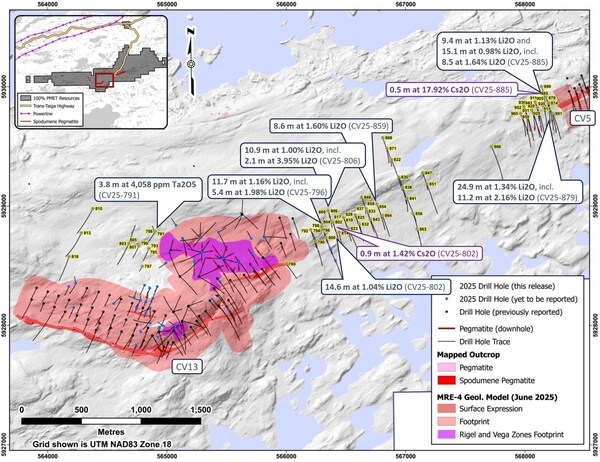
Figure 7: Drill holes completed through 2025 at the CV13 Pegmatite and at the CV5 Pegmatite. (CNW Group/PMET Resources Inc.)
CV5 Pegmatite
The 2025 drilling at the CV5 Pegmatite and areas proximal in support of its development included step-out holes to the southwest as well as condemnation holes of proposed waste rock stockpiles and other key infrastructure locations. A total of 13,591 m (60 holes) were completed with all results announced herein (see Figure 7, Table 4, Table 5, and Table 7).
Drilling to test a southwestern extension of CV5 (7,101 m over 18 holes) was successful and traced the pegmatite approximately 0.4 km further along strike in this direction. Results include 24.9 m at 1.34% Li2O, including 11.2 m at 2.16% Li2O (CV25-879), 9.4 m at 1.13% Li2O (CV25-885), and 15.1 m at 0.98% Li2O (CV25-885). The strike-length of the CV5 Pegmatite now extends approximately 5.0 km and remains open in several directions.
Additionally, a high-grade caesium intercept of 1.0 m at 9.1% Cs2O was returned in drill hole CV25-855 over the extension. The interval included the highest-grade individual caesium sample collected to date at CV5 (0.5 m at 17.9% Cs2O) with massive pollucite visually identified (Figure 8). This discovery is open in several directions and highlights the potential for well-mineralized pods of caesium (via the mineral pollucite) at CV5 as a co-product to lithium and tantalum.
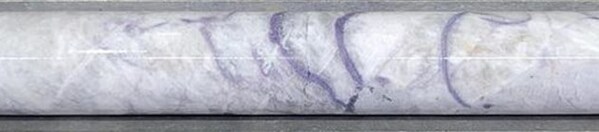
Figure 8: Massive pollucite with lepidolite veining in drill hole CV25-885 at ~240 m depth (core length) at the CV5 Pegmatite’s southwestern extension. Core graded 0.5 m at 17.9% Cs2O over sample interval (240.2 m to 240.7 m). (CNW Group/PMET Resources Inc.)
The 2025 drill campaign also included condemnation drilling of waste rock Stockpiles 001 and 002 (5,465 m over 36 holes) as well as at the underground ramp and ventilation shaft (1,025 m over 6 holes) locations proposed in the recently completed lithium-only Feasibility Study on the CV5 Pegmatite (see news release dated October 20, 2025) (Figure 2). This drilling achieved its objectives of characterizing the local geology as well as condemning key areas, and will inform the pending Environmental and Social Impact Assessment ("ESIA"), and planned bulk sample for the Project.
CV8 Pegmatite
The CV8 Pegmatite, characterized at surface by multiple LCT pegmatite outcrops, is situated approximately 0.5 km south of the CV12 Pegmatite on a sub-parallel trend. A total of 2,523 m (11 holes) were completed, of which, results for 1,312 m (6 holes) are announced herein (see Figure 4, Table 6, and Table 7).
The best results from the holes announced herein at the CV8 Pegmatite are 3.1 m at 1.52% Li2O and 3.5 m at 1.26% Li2O – both from drill hole CV25-940A. These intervals also returned high-grade tantalum at 321 ppm Ta2O5 and 295 ppm Ta2O5, respectively.
The target remains prospective and warrants further drilling given the association with ultramafic rocks proximal (often strongly associated with the widest spodumene pegmatite bodies at the Property), the large number of individual pegmatite intercepts in drill hole (suggests volume potential), and the presence of spodumene in the system (lithium budget is present).
Next Steps
The geology team is currently interpreting and working with the new drill hole data to advance the host rock and pegmatite geological models for the Project. The work is focused on the CV5 and CV13 pegmatites ahead of updates that will feed into updated block models, culminating into a revised economic study scheduled for the second half of 2026. The data will also inform an underground bulk sample of mineralized pegmatite at CV5, which is currently being permitted.
Results remain to be reported for 15,081 m (72 holes), of which the vast majority are from infill and step-holes at the CV13 Pegmatite, including the high-grade (Li-Cs-Ta) Vega Zone. Final assay certificates are anticipated to be received over the holidays and therefore results for the final drill holes of the 2025 campaign will be reported in the new year.
Table 1: Core assay summary for drill holes reported herein at the CV4 Spodumene Pegmatite.
Hole ID |
From |
To |
Interval |
Li2O |
Cs2O |
Ta2O5 |
||
CV25-928 |
278.9 |
281.4 |
2.5 |
0.19 |
0.03 |
130 |
||
CV25-932 |
No >2 m pegmatite intersections |
|||||||
CV25-935 |
No >2 m pegmatite intersections |
|||||||
CV25-942 |
349.6 |
363.2 |
13.6 |
0.90 |
0.05 |
76 |
||
Incl. |
350.2 |
362.1 |
11.9 |
1.01 |
0.05 |
76 |
||
436.9 |
457.1 |
20.2(3) |
0.75 |
0.03 |
78 |
|||
Incl. |
437.5 |
445.4 |
7.9 |
1.41 |
0.03 |
86 |
||
CV25-950 |
375.8 |
387.3 |
11.5 |
1.27 |
0.04 |
125 |
||
457.6 |
471.3 |
13.7 |
0.27 |
0.03 |
84 |
|||
CV25-961 |
Hole lost and re-collared |
|||||||
CV25-1002 |
Hole lost and re-collared |
|||||||
CV25-1002A |
Hole lost and re-collared |
|||||||
CV25-1013 |
177.3 |
182.7 |
5.4 |
0.00 |
0.01 |
385 |
||
373.2 |
400.2 |
27.0 |
1.14 |
0.03 |
122 |
|||
Incl. |
376.9 |
396.0 |
19.2 |
1.45 |
0.03 |
113 |
||
419.4 |
423.5 |
4.1 |
0.02 |
0.01 |
98 |
|||
463.0 |
469.4 |
6.4 |
0.28 |
0.03 |
156 |
|||
490.2 |
503.1 |
13.0 |
1.37 |
0.03 |
97 |
|||
(1) All intervals are core length and presented for all pegmatite intervals >2 m. (2) Collared in pegmatite. (3) Includes minor intervals of non-pegmatite units (typically <3 m). |
||||||||
Table 2: Core assay summary for drill holes reported herein at the CV12 Spodumene Pegmatite.
Hole ID |
From |
To |
Interval |
Li2O |
Cs2O |
Ta2O5 |
CV25-872 |
20.0 |
22.7 |
2.8 |
0.39 |
0.07 |
118 |
33.3 |
38.0 |
4.8 |
0.17 |
0.07 |
54 |
|
CV25-873 |
7.8 |
11.7 |
3.9 |
0.67 |
0.22 |
328 |
Incl. |
8.4 |
8.9 |
0.5 |
0.50 |
0.85 |
211 |
13.7 |
15.7 |
2.0 |
0.54 |
0.08 |
144 |
|
57.8 |
60.3 |
2.5 |
0.82 |
0.03 |
232 |
|
CV25-875 |
7.6 |
36.6 |
29.0 |
1.31 |
0.81 |
248 |
Incl. |
12.5 |
14.0 |
1.5 |
0.25 |
0.89 |
6 |
Incl. |
22.6 |
35.1 |
12.5 |
2.76 |
1.55 |
334 |
or |
22.6 |
25.6 |
3.0 |
2.03 |
5.82 |
368 |
or |
31.6 |
35.1 |
3.6 |
3.75 |
0.21 |
587 |
58.2 |
64.2 |
6.0 |
0.01 |
0.00 |
3 |
|
CV25-876 |
20.0 |
25.1 |
5.1 |
0.18 |
0.09 |
118 |
36.7 |
39.7 |
3.0 |
0.04 |
0.05 |
301 |
|
CV25-877 |
No >2 m pegmatite intersections |
|||||
CV25-878 |
28.1 |
35.5 |
7.4 |
0.70 |
0.21 |
108 |
58.2 |
61.7 |
3.5 |
0.52 |
0.10 |
172 |
|
96.7 |
98.7 |
2.0 |
0.02 |
0.04 |
230 |
|
CV25-880 |
30.9 |
50.2 |
19.3 |
0.51 |
0.31 |
170 |
Incl. |
31.9 |
36.2 |
4.3 |
1.36 |
0.64 |
144 |
Incl. |
44.9 |
46.5 |
1.6 |
0.41 |
0.97 |
165 |
CV25-881 |
48.0 |
53.4 |
5.4 |
0.07 |
0.03 |
118 |
117.5 |
120.5 |
3.0 |
0.03 |
0.04 |
165 |
|
CV25-882 |
43.7 |
53.0 |
9.3 |
0.11 |
0.05 |
302 |
60.4 |
62.4 |
2.0 |
0.06 |
0.04 |
165 |
|
CV25-883 |
57.4 |
60.3 |
2.9 |
0.13 |
0.01 |
78 |
CV25-884 |
No >2 m pegmatite intersections |
|||||
CV25-886 |
133.3 |
135.4 |
2.1 |
0.00 |
0.02 |
115 |
CV25-887 |
No >2 m pegmatite intersections |
|||||
CV25-888 |
No >2 m pegmatite intersections |
|||||
CV25-889 |
Hole lost and re-collared |
|||||
CV25-889A |
No >2 m pegmatite intersections |
|||||
CV25-890 |
Hole lost and re-collared |
|||||
CV25-890A |
No >2 m pegmatite intersections |
|||||
CV25-892 |
No >2 m pegmatite intersections |
|||||
CV25-893 |
No >2 m pegmatite intersections |
|||||
CV25-894 |
43.9 |
73.2 |
29.4 |
1.28 |
0.31 |
177 |
Incl. |
46.8 |
58.7 |
11.9 |
2.86 |
0.38 |
168 |
or |
57.4 |
60.0 |
2.6 |
1.58 |
1.02 |
159 |
Incl. |
64.3 |
66.5 |
2.2 |
0.17 |
0.71 |
297 |
CV25-895 |
110.7 |
113.1 |
2.3 |
0.01 |
0.00 |
248 |
116.6 |
118.9 |
2.3 |
0.01 |
0.06 |
242 |
|
CV25-897 |
56.7 |
59.5 |
2.8 |
0.04 |
0.01 |
217 |
74.1 |
84.5 |
10.4 |
0.06 |
0.01 |
94 |
|
CV25-898 |
No >2 m pegmatite intersections |
|||||
CV25-899 |
44.2 |
46.2 |
2.0 |
0.02 |
0.00 |
15 |
92.8 |
97.9 |
5.1 |
0.01 |
0.06 |
78 |
|
CV25-900 |
No >2 m pegmatite intersections |
|||||
CV25-901 |
No >2 m pegmatite intersections |
|||||
CV25-902 |
28.2 |
46.4 |
18.3 |
0.57 |
0.36 |
228 |
Incl. |
30.0 |
40.8 |
10.9 |
0.91 |
0.54 |
273 |
or |
33.6 |
38.0 |
4.4 |
0.85 |
0.90 |
156 |
83.5 |
104.0 |
20.4(3) |
0.57 |
0.23 |
145 |
|
Incl. |
97.0 |
104.0 |
7.0 |
0.99 |
0.43 |
165 |
or |
97.0 |
98.0 |
1.0 |
1.11 |
1.47 |
203 |
or |
102.5 |
104.0 |
1.5 |
1.63 |
0.63 |
149 |
CV25-903 |
54.8 |
64.1 |
9.3 |
0.34 |
0.16 |
52 |
71.2 |
73.8 |
2.6 |
0.20 |
0.25 |
155 |
|
CV25-904 |
80.9 |
87.3 |
6.4 |
0.02 |
0.01 |
555 |
114.1 |
116.1 |
2.0 |
0.01 |
0.00 |
102 |
|
CV25-906 |
20.7 |
23.3 |
2.5 |
0.11 |
0.12 |
319 |
61.1 |
66.2 |
5.1 |
0.21 |
0.11 |
265 |
|
CV25-907 |
24.4 |
29.5 |
5.1 |
0.01 |
0.01 |
87 |
37.6 |
42.2 |
4.6 |
0.05 |
0.05 |
70 |
|
CV25-908 |
148.7 |
152.3 |
3.6 |
0.01 |
0.07 |
72 |
CV25-909 |
No >2 m pegmatite intersections |
|||||
CV25-910 |
117.7 |
123.4 |
5.7 |
0.05 |
0.01 |
303 |
127.3 |
132.6 |
5.3 |
0.02 |
0.01 |
123 |
|
134.6 |
138.9 |
4.3 |
0.03 |
0.01 |
84 |
|
CV25-912 |
87.2 |
94.2 |
7.0 |
0.02 |
0.06 |
70 |
102.0 |
105.2 |
3.2 |
0.02 |
0.04 |
106 |
|
186.4 |
187.4 |
1.0 |
0.02 |
1.46 |
53 |
|
CV25-916 |
14.9 |
21.9 |
7.0(2) |
0.01 |
0.10 |
275 |
134.5 |
143.8 |
9.3 |
0.13 |
0.04 |
96 |
|
CV25-918 |
38.0 |
44.5 |
6.5 |
0.35 |
0.10 |
157 |
59.7 |
64.6 |
4.9 |
0.07 |
0.06 |
105 |
|
CV25-922 |
6.5 |
47.8 |
41.3(3) |
0.88 |
0.23 |
167 |
Incl. |
14.8 |
42.3 |
27.5 |
1.20 |
0.29 |
192 |
or |
22.3 |
23.8 |
1.4 |
2.14 |
1.24 |
257 |
or |
35.5 |
42.3 |
6.8 |
1.97 |
0.38 |
233 |
or |
37.0 |
38.6 |
1.5 |
2.29 |
0.81 |
545 |
CV25-923 |
19.8 |
30.2 |
10.4 |
1.33 |
0.39 |
293 |
Incl. |
25.2 |
27.2 |
2.0 |
1.20 |
0.53 |
100 |
Incl. |
28.8 |
30.2 |
1.4 |
2.81 |
1.77 |
186 |
33.9 |
49.3 |
15.5 |
0.14 |
0.11 |
216 |
|
78.9 |
82.6 |
3.6 |
0.03 |
0.03 |
151 |
|
CV25-926 |
39.7 |
43.4 |
3.7 |
0.08 |
0.15 |
96 |
54.4 |
59.8 |
5.5 |
0.12 |
0.11 |
152 |
|
CV25-934 |
222.1 |
224.1 |
2.0 |
0.02 |
0.02 |
156 |
238.3 |
242.3 |
4.0 |
0.10 |
0.01 |
211 |
|
CV25-938 |
No >2 m pegmatite intersections |
|||||
CV25-939 |
No >2 m pegmatite intersections |
|||||
CV25-944 |
8.6 |
10.1 |
1.5 |
0.04 |
3.30 |
69 |
19.0 |
23.3 |
4.3 |
0.47 |
0.04 |
174 |
|
73.4 |
75.4 |
2.0 |
0.05 |
0.03 |
124 |
|
CV25-946 |
31.8 |
62.5 |
30.7 |
0.29 |
0.06 |
123 |
64.8 |
70.7 |
5.9 |
0.12 |
0.05 |
160 |
|
113.6 |
119.6 |
6.0 |
0.04 |
0.08 |
211 |
|
CV25-949 |
31.5 |
38.5 |
7.0 |
0.07 |
0.06 |
55 |
82.5 |
90.8 |
8.3 |
0.01 |
0.04 |
71 |
|
CV25-954 |
No >2 m pegmatite intersections |
|||||
CV25-956 |
No >2 m pegmatite intersections |
|||||
CV25-960 |
No >2 m pegmatite intersections |
|||||
CV25-963 |
No >2 m pegmatite intersections |
|||||
(1) All intervals are core length and presented for all pegmatite intervals >2 m. (2) Collared in pegmatite. (3) Includes minor intervals of non-pegmatite units (typically <3 m). |
Table 3: Core assay summary for drill holes reported herein at the CV13 Spodumene Pegmatite.
Hole ID |
From |
To |
Interval |
Li2O |
Cs2O |
Ta2O5 |
CV25-788 |
374.2 |
377.9 |
3.6 |
0.72 |
0.19 |
116 |
CV25-789 |
31.12 |
40.5 |
9.4 |
1.11 |
0.06 |
220 |
Incl. |
35.34 |
39.5 |
4.2 |
2.07 |
0.07 |
115 |
CV25-790 |
121.8 |
132.2 |
10.3 |
0.15 |
0.03 |
194 |
CV25-791 |
173.4 |
177.2 |
3.8 |
0.21 |
0.01 |
4058 |
CV25-792 |
199.2 |
211.0 |
11.8 |
0.84 |
0.08 |
175 |
CV25-793 |
138.0 |
144.4 |
6.3 |
0.14 |
0.03 |
294 |
312.44 |
314.8 |
2.3 |
0.77 |
0.06 |
125 |
|
CV25-794 |
233.6 |
237.9 |
4.2 |
0.05 |
0.03 |
221 |
CV25-795 |
No >2 m pegmatite intersections |
|||||
CV25-796 |
170.0 |
181.7 |
11.7 |
1.16 |
0.06 |
412 |
Incl. |
171.9 |
177.3 |
5.4 |
1.98 |
0.07 |
366 |
CV25-797 |
No >2 m pegmatite intersections |
|||||
CV25-798 |
231.8 |
234.0 |
2.2 |
0.01 |
0.01 |
176 |
CV25-799 |
No >2 m pegmatite intersections |
|||||
CV25-800 |
110.5 |
120.3 |
9.8 |
0.03 |
0.02 |
216 |
CV25-801 |
No >2 m pegmatite intersections |
|||||
CV25-802 |
45.0 |
47.0 |
2.0 |
0.02 |
0.01 |
62 |
194.8 |
209.4 |
14.6 |
1.04 |
0.17 |
165 |
|
Incl. |
201.4 |
202.3 |
0.9 |
1.68 |
1.42 |
600 |
CV25-803 |
327.2 |
329.0 |
1.8 |
2.28 |
0.32 |
159 |
CV25-804 |
174.3 |
185.3 |
11.0 |
0.90 |
0.09 |
237 |
CV25-805 |
No >2 m pegmatite intersections |
|||||
CV25-806 |
108.6 |
111.3 |
2.7 |
0.04 |
0.02 |
151 |
275.7 |
286.6 |
10.9 |
1.00 |
0.09 |
123 |
|
Incl. |
278.0 |
280.0 |
2.1 |
3.95 |
0.21 |
337 |
CV25-809 |
No >2 m pegmatite intersections |
|||||
CV25-810 |
No >2 m pegmatite intersections |
|||||
CV25-813 |
No >2 m pegmatite intersections |
|||||
CV25-814 |
84.2 |
92.5 |
8.4 |
0.22 |
0.03 |
158 |
CV25-817 |
212.2 |
214.9 |
2.7 |
0.61 |
0.09 |
712 |
CV25-818 |
No >2 m pegmatite intersections |
|||||
CV25-819 |
55.6 |
58.1 |
2.5 |
0.01 |
0.02 |
62 |
198.2 |
208.9 |
10.7 |
0.98 |
0.09 |
123 |
|
Incl. |
199.6 |
203.7 |
4.1 |
2.18 |
0.11 |
173 |
CV25-822 |
No >2 m pegmatite intersections |
|||||
CV25-823 |
No >2 m pegmatite intersections |
|||||
CV25-825 |
212.0 |
215.9 |
4.0 |
0.24 |
0.08 |
113 |
CV25-828 |
208.8 |
211.7 |
2.8 |
0.93 |
0.09 |
347 |
214.2 |
218.7 |
4.5 |
0.17 |
0.06 |
133 |
|
CV25-830 |
No >2 m pegmatite intersections |
|||||
CV25-832 |
No >2 m pegmatite intersections |
|||||
CV25-833 |
227.0 |
232.0 |
5.0 |
0.69 |
0.09 |
331 |
240.6 |
243.3 |
2.7 |
0.26 |
0.12 |
132 |
|
CV25-836 |
No >2 m pegmatite intersections |
|||||
CV25-837 |
245.1 |
253.2 |
8.1 |
1.00 |
0.21 |
100 |
Incl. |
248.4 |
249.9 |
1.5 |
3.68 |
0.83 |
116 |
CV25-841 |
No >2 m pegmatite intersections |
|||||
CV25-843 |
No >2 m pegmatite intersections |
|||||
CV25-846 |
329.7 |
332.7 |
3.0 |
0.11 |
0.02 |
447 |
CV25-847 |
No >2 m pegmatite intersections |
|||||
CV25-851 |
No >2 m pegmatite intersections |
|||||
CV25-854 |
263.6 |
268.5 |
4.9 |
0.57 |
0.05 |
193 |
CV25-858 |
No >2 m pegmatite intersections |
|||||
CV25-859 |
261.5 |
270.1 |
8.6 |
1.60 |
0.09 |
115 |
CV25-863 |
No >2 m pegmatite intersections |
|||||
CV25-864 |
No >2 m pegmatite intersections |
|||||
CV25-868 |
No >2 m pegmatite intersections |
|||||
CV25-871 |
No >2 m pegmatite intersections |
|||||
(1) All intervals are core length and presented for all pegmatite intervals >2 m. (2) Collared in pegmatite. (3) Includes minor intervals of non-pegmatite units (typically <3 m). |
Table 4: Core assay summary for drill holes reported herein at the CV5 Spodumene Pegmatite.
Hole ID |
From |
To |
Interval |
Li2O |
Cs2O |
Ta2O5 |
Comments |
CV25-866 |
No >2 m pegmatite intersections |
||||||
CV25-874 |
240.8 |
244.8 |
4.0 |
0.01 |
0.01 |
34 |
|
CV25-879 |
72.7 |
77.1 |
4.5 |
0.72 |
0.10 |
119 |
|
259.1 |
262.1 |
3.0 |
0.05 |
0.03 |
307 |
||
272.3 |
297.2 |
24.9 |
1.34 |
0.17 |
210 |
||
Incl. |
283.8 |
295.1 |
11.2 |
2.16 |
0.26 |
173 |
|
CV25-885 |
64.3 |
68.5 |
4.2 |
0.15 |
0.04 |
111 |
|
222.1 |
231.6 |
9.4 |
1.13 |
0.08 |
270 |
||
238.4 |
253.5 |
15.1 |
0.98 |
0.71 |
225 |
||
Incl. |
238.4 |
246.9 |
8.5 |
1.64 |
1.20 |
265 |
|
or |
240.2 |
241.2 |
1.0 |
1.22 |
9.09 |
588 |
|
or |
240.2 |
240.7 |
0.5 |
0.99 |
17.92 |
1089 |
|
407.1 |
411.2 |
4.2 |
0.01 |
0.05 |
233 |
||
CV25-891 |
No >2 m pegmatite intersections |
||||||
CV25-896 |
No >2 m pegmatite intersections |
||||||
CV25-905 |
32.7 |
40.0 |
7.3 |
0.48 |
0.03 |
161 |
|
303.6 |
318.3 |
14.7 |
0.21 |
0.03 |
235 |
||
336.2 |
338.5 |
2.3 |
0.19 |
0.05 |
247 |
||
CV25-911 |
29.7 |
33.8 |
4.1 |
0.03 |
0.01 |
106 |
|
253.2 |
263.5 |
10.3 |
0.65 |
0.11 |
240 |
||
CV25-915 |
30.0 |
35.3 |
5.3 |
0.48 |
0.04 |
130 |
|
255.0 |
257.4 |
2.4 |
0.08 |
0.07 |
302 |
||
361.5 |
363.6 |
2.1 |
0.01 |
0.05 |
227 |
||
CV25-920 |
No >2 m pegmatite intersections |
||||||
CV25-925 |
343.7 |
355.0 |
11.3 |
0.04 |
0.01 |
90 |
|
359.8 |
362.1 |
2.2 |
0.09 |
0.03 |
102 |
||
363.6 |
390.4 |
26.8 |
0.42 |
0.03 |
186 |
||
Incl. |
369.1 |
373.2 |
4.1 |
0.91 |
0.05 |
556 |
|
Incl. |
378.2 |
384.6 |
6.4 |
0.95 |
0.04 |
158 |
|
CV25-929 |
240.7 |
246.7 |
6.0 |
0.46 |
0.04 |
209 |
|
CV25-931 |
264.5 |
268.0 |
3.4 |
0.41 |
0.07 |
117 |
|
CV25-936 |
283.2 |
287.1 |
3.8 |
2.29 |
0.17 |
412 |
|
317.7 |
320.5 |
2.8 |
0.53 |
0.07 |
320 |
||
330.7 |
333.4 |
2.7 |
0.23 |
0.01 |
139 |
||
CV25-943 |
238.2 |
251.5 |
13.3(3) |
0.50 |
0.08 |
329 |
|
260.1 |
265.4 |
5.2 |
0.66 |
0.02 |
280 |
||
426.3 |
427.0 |
0.7 |
0.33 |
>1.06 |
396 |
Cs overlimit pending |
|
442.8 |
445.2 |
2.4 |
0.05 |
0.05 |
175 |
||
CV25-952 |
220.0 |
223.1 |
3.1 |
0.09 |
0.04 |
178 |
|
CV25-959 |
No >2 m pegmatite intersections |
||||||
CV25-965 |
No >2 m pegmatite intersections |
||||||
(1) All intervals are core length and presented for all pegmatite intervals >2 m. (2) Collared in pegmatite. (3) Includes minor intervals of non-pegmatite units (typically <3 m). |
Table 5: Core assay summary for drill holes reported herein completed for infrastructure development.
Hole ID |
From |
To |
Interval |
Li2O |
Cs2O |
Ta2O5 |
CV25-807 |
No >2 m pegmatite intersections |
|||||
CV25-808 |
No >2 m pegmatite intersections |
|||||
CV25-811 |
No >2 m pegmatite intersections |
|||||
CV25-812 |
No >2 m pegmatite intersections |
|||||
CV25-815 |
No >2 m pegmatite intersections |
|||||
CV25-816 |
No >2 m pegmatite intersections |
|||||
CV25-820 |
No >2 m pegmatite intersections |
|||||
CV25-821 |
No >2 m pegmatite intersections |
|||||
CV25-824 |
No >2 m pegmatite intersections |
|||||
CV25-826 |
No >2 m pegmatite intersections |
|||||
CV25-827 |
No >2 m pegmatite intersections |
|||||
CV25-829 |
No >2 m pegmatite intersections |
|||||
CV25-831 |
No >2 m pegmatite intersections |
|||||
CV25-834 |
No >2 m pegmatite intersections |
|||||
CV25-835 |
No >2 m pegmatite intersections |
|||||
CV25-838 |
No >2 m pegmatite intersections |
|||||
CV25-839 |
No >2 m pegmatite intersections |
|||||
CV25-840 |
No >2 m pegmatite intersections |
|||||
CV25-842 |
2.6 |
15.8 |
13.2 |
0.00 |
0.01 |
30 |
CV25-844 |
50.6 |
52.6 |
2.0 |
0.00 |
0.01 |
39 |
CV25-845 |
No >2 m pegmatite intersections |
|||||
CV25-848 |
96.2 |
144.8 |
48.6 |
0.01 |
0.00 |
17 |
CV25-849 |
74.3 |
76.7 |
2.4 |
0.00 |
0.00 |
64 |
79.8 |
85.7 |
5.8 |
0.00 |
0.00 |
89 |
|
CV25-850 |
No >2 m pegmatite intersections |
|||||
CV25-852 |
144.2 |
151.6 |
7.4 |
0.00 |
0.00 |
36 |
CV25-853 |
No >2 m pegmatite intersections |
|||||
CV25-855 |
97.3 |
101.6 |
4.3 |
0.01 |
0.00 |
20 |
122.0 |
124.0 |
2.0 |
0.03 |
0.01 |
6 |
|
125.1 |
132.8 |
7.6 |
0.01 |
0.00 |
12 |
|
CV25-856 |
No >2 m pegmatite intersections |
|||||
CV25-857 |
No >2 m pegmatite intersections |
|||||
CV25-860 |
96.9 |
100.9 |
4.0 |
0.00 |
0.00 |
19 |
CV25-861 |
No >2 m pegmatite intersections |
|||||
CV25-862 |
No >2 m pegmatite intersections |
|||||
CV25-865 |
No >2 m pegmatite intersections |
|||||
CV25-867 |
No >2 m pegmatite intersections |
|||||
CV25-869 |
No >2 m pegmatite intersections |
|||||
CV25-870 |
No >2 m pegmatite intersections |
|||||
CV25-970 |
No >2 m pegmatite intersections |
|||||
CV25-974 |
No >2 m pegmatite intersections |
|||||
CV25-981 |
No >2 m pegmatite intersections |
|||||
CV25-987 |
No >2 m pegmatite intersections |
|||||
CV25-990 |
No >2 m pegmatite intersections |
|||||
CV25-993 |
No >2 m pegmatite intersections |
|||||
(1) All intervals are core length and presented for all pegmatite intervals >2 m. (2) Collared in pegmatite. (3) Includes minor intervals of non-pegmatite units (typically <3 m). |
Table 6: Core assay summary for drill holes reported herein at the CV8 Spodumene Pegmatite.
Hole ID |
From |
To |
Interval |
Li2O |
Cs2O |
Ta2O5 |
CV25-940 |
Hole lost and re-collared |
|||||
CV25-940A |
16.61 |
19.7 |
3.1 |
1.52 |
0.03 |
321 |
41.16 |
44.6 |
3.5 |
1.26 |
0.05 |
295 |
|
108.07 |
113.5 |
5.4 |
0.02 |
0.01 |
210 |
|
CV25-947 |
154.3 |
160.68 |
6.4 |
0.03 |
0.03 |
154 |
230.2 |
233.17 |
3.0 |
0.01 |
0.01 |
159 |
|
271.2 |
274.18 |
3.0 |
0.01 |
0.01 |
390 |
|
CV25-951 |
189.6 |
192.6 |
3.0 |
0.04 |
0.01 |
52 |
CV25-978 |
82.85 |
85.7 |
2.9 |
0.08 |
0.03 |
103 |
203.26 |
205.6 |
2.3 |
0.01 |
0.01 |
121 |
|
CV25-991 |
No >2 m pegmatite intersections |
|||||
(1) All intervals are core length and presented for all pegmatite intervals >2 m. (2) Collared in pegmatite. (3) Includes minor intervals of non-pegmatite units (typically <3 m). |
Table 7: Attributes for drill holes reported herein at the Shaakichiuwaanaan Property.
Hole ID |
Substrate |
Total Depth |
Azimuth |
Dip |
Easting |
Northing |
Elevation |
Core |
Area |
CV25-788 |
Land |
427.9 |
0 |
-90 |
564900.5 |
5928788.9 |
403.2 |
NQ |
CV13 |
CV25-789 |
Land |
247.8 |
140 |
-55 |
565998.5 |
5928514.4 |
366.1 |
NQ |
CV13 |
CV25-790 |
Land |
302.1 |
158 |
-45 |
566242.2 |
5928702.7 |
374.4 |
NQ |
CV13 |
CV25-791 |
Land |
242.0 |
200 |
-60 |
564900.3 |
5928788.3 |
403.2 |
NQ |
CV13 |
CV25-792 |
Land |
230.1 |
158 |
-45 |
566204.2 |
5928801.5 |
382.1 |
NQ |
CV13 |
CV25-793 |
Land |
359.0 |
0 |
-90 |
564848.3 |
5928645.6 |
404.1 |
NQ |
CV13 |
CV25-794 |
Land |
293.0 |
158 |
-72 |
566203.9 |
5928802.2 |
382.1 |
NQ |
CV13 |
CV25-795 |
Land |
196.9 |
200 |
-55 |
564848.0 |
5928644.8 |
404.1 |
NQ |
CV13 |
CV25-796 |
Land |
209.0 |
158 |
-45 |
566297.2 |
5928828.6 |
379.4 |
NQ |
CV13 |
CV25-797 |
Land |
194.0 |
200 |
-75 |
564791.9 |
5928495.4 |
410.2 |
NQ |
CV13 |
CV25-798 |
Land |
272.0 |
158 |
-70 |
566296.8 |
5928829.3 |
379.4 |
NQ |
CV13 |
CV25-799 |
Land |
188.1 |
0 |
-90 |
564764.7 |
5928666.9 |
403.2 |
NQ |
CV13 |
CV25-800 |
Land |
203.0 |
158 |
-45 |
566332.8 |
5928736.0 |
370.9 |
NQ |
CV13 |
CV25-801 |
Land |
190.9 |
200 |
-55 |
564764.4 |
5928666.2 |
403.2 |
NQ |
CV13 |
CV25-802 |
Land |
259.8 |
158 |
-70 |
566388.9 |
5928866.7 |
373.9 |
NQ |
CV13 |
CV25-803 |
Land |
349.9 |
200 |
-55 |
564679.5 |
5928684.8 |
409.4 |
NQ |
CV13 |
CV25-804 |
Land |
244.9 |
158 |
-45 |
566389.0 |
5928866.2 |
374.0 |
NQ |
CV13 |
CV25-805 |
Land |
305.1 |
20 |
-60 |
564680.1 |
5928685.8 |
409.4 |
NQ |
CV13 |
CV25-806 |
Land |
398.0 |
158 |
-67 |
566350.5 |
5928959.9 |
381.2 |
NQ |
CV13 |
CV25-807 |
Land |
147.7 |
340 |
-45 |
572480.6 |
5932795.2 |
409.7 |
NQ |
North CV5 |
CV25-808 |
Land |
152.0 |
340 |
-45 |
572277.4 |
5932748.6 |
407.9 |
NQ |
North CV5 |
CV25-809 |
Land |
442.9 |
158 |
-81 |
566350.4 |
5928960.1 |
381.1 |
NQ |
CV13 |
CV25-810 |
Land |
434.1 |
200 |
-56 |
564378.3 |
5928979.4 |
410.1 |
NQ |
CV13 |
CV25-811 |
Land |
152.0 |
340 |
-45 |
573480.6 |
5933151.9 |
422.3 |
NQ |
North CV5 |
CV25-812 |
Land |
151.9 |
340 |
-45 |
573467.0 |
5933198.2 |
430.6 |
NQ |
North CV5 |
CV25-813 |
Land |
404.1 |
200 |
-52 |
564281.4 |
5928775.6 |
411.8 |
NQ |
CV13 |
CV25-814 |
Land |
257.0 |
168 |
-45 |
566441.8 |
5928780.5 |
370.4 |
NQ |
CV13 |
CV25-815 |
Land |
152.0 |
340 |
-45 |
573803.6 |
5933256.3 |
408.9 |
NQ |
North CV5 |
CV25-816 |
Land |
151.9 |
340 |
-45 |
573614.2 |
5932954.3 |
404.2 |
NQ |
North CV5 |
CV25-817 |
Land |
283.9 |
158 |
-45 |
566480.4 |
5928904.7 |
375.6 |
NQ |
CV13 |
CV25-818 |
Land |
317.1 |
200 |
-47 |
564179.1 |
5928577.3 |
413.8 |
NQ |
CV13 |
CV25-819 |
Land |
287.0 |
158 |
-70 |
566480.7 |
5928904.0 |
375.6 |
NQ |
CV13 |
CV25-820 |
Land |
149.1 |
340 |
-45 |
573402.6 |
5932897.9 |
402.5 |
NQ |
North CV5 |
CV25-821 |
Land |
151.9 |
340 |
-45 |
573734.3 |
5933451.3 |
419.6 |
NQ |
North CV5 |
CV25-822 |
Land |
401.0 |
158 |
-45 |
566879.7 |
5929390.6 |
388.6 |
NQ |
CV13 |
CV25-823 |
Land |
253.8 |
158 |
-45 |
566518.8 |
5928813.7 |
375.0 |
NQ |
CV13 |
CV25-824 |
Land |
152.0 |
340 |
-45 |
573334.9 |
5933086.9 |
425.7 |
NQ |
North CV5 |
CV25-825 |
Land |
323.0 |
158 |
-45 |
566577.0 |
5928926.4 |
376.8 |
NQ |
CV13 |
CV25-826 |
Land |
151.8 |
340 |
-45 |
573719.4 |
5933543.5 |
417.4 |
NQ |
North CV5 |
CV25-827 |
Land |
155.0 |
340 |
-45 |
572866.3 |
5932915.4 |
408.1 |
NQ |
North CV5 |
CV25-828 |
Land |
251.0 |
158 |
-70 |
566576.7 |
5928927.1 |
376.7 |
NQ |
CV13 |
CV25-829 |
Land |
151.9 |
340 |
-45 |
573198.6 |
5933460.4 |
444.0 |
NQ |
North CV5 |
CV25-830 |
Land |
332.0 |
158 |
-45 |
566941.7 |
5929243.7 |
396.9 |
NQ |
CV13 |
CV25-831 |
Land |
152.1 |
340 |
-45 |
572947.4 |
5933257.8 |
430.8 |
NQ |
North CV5 |
CV25-832 |
Land |
197.0 |
158 |
-45 |
566612.2 |
5928848.6 |
369.3 |
NQ |
CV13 |
CV25-833 |
Land |
292.9 |
158 |
-45 |
566669.5 |
5928978.2 |
374.4 |
NQ |
CV13 |
CV25-834 |
Land |
152.1 |
340 |
-45 |
573222.3 |
5933220.9 |
444.8 |
NQ |
North CV5 |
CV25-835 |
Land |
155.1 |
340 |
-45 |
572729.0 |
5933291.2 |
423.9 |
NQ |
North CV5 |
CV25-836 |
Land |
296.0 |
158 |
-45 |
566974.0 |
5929158.1 |
380.4 |
NQ |
CV13 |
CV25-837 |
Land |
284.0 |
158 |
-70 |
566669.3 |
5928978.9 |
374.5 |
NQ |
CV13 |
CV25-838 |
Land |
152.1 |
340 |
-45 |
572655.0 |
5933491.3 |
406.7 |
NQ |
North CV5 |
CV25-839 |
Land |
151.8 |
340 |
-45 |
572327.9 |
5932933.0 |
414.9 |
NQ |
North CV5 |
CV25-840 |
Land |
152.0 |
340 |
-45 |
572183.7 |
5933318.9 |
406.0 |
NQ |
North CV5 |
CV25-841 |
Land |
296.2 |
158 |
-45 |
567010.6 |
5929064.7 |
371.2 |
NQ |
CV13 |
CV25-842 |
Land |
152.0 |
340 |
-45 |
568907.0 |
5932167.5 |
380.7 |
NQ |
North CV5 |
CV25-843 |
Land |
248.0 |
158 |
-45 |
566704.6 |
5928888.5 |
370.1 |
NQ |
CV13 |
CV25-844 |
Land |
152.0 |
340 |
-45 |
569273.8 |
5932604.1 |
372.6 |
NQ |
North CV5 |
CV25-845 |
Land |
151.9 |
340 |
-45 |
572260.3 |
5933120.7 |
418.2 |
NQ |
North CV5 |
CV25-846 |
Land |
380.0 |
158 |
-67 |
566630.7 |
5929074.5 |
387.2 |
NQ |
CV13 |
CV25-847 |
Land |
223.8 |
158 |
-45 |
567141.4 |
5929278.9 |
388.2 |
NQ |
CV13 |
CV25-848 |
Land |
149.0 |
340 |
-45 |
568891.9 |
5932280.7 |
378.3 |
NQ |
North CV5 |
CV25-849 |
Land |
152.0 |
340 |
-45 |
569355.1 |
5932372.9 |
392.3 |
NQ |
North CV5 |
CV25-850 |
Land |
152.0 |
340 |
-45 |
569639.6 |
5933058.1 |
373.3 |
NQ |
North CV5 |
CV25-851 |
Land |
395.1 |
158 |
-45 |
567177.2 |
5929185.3 |
378.1 |
NQ |
CV13 |
CV25-852 |
Land |
151.8 |
340 |
-45 |
568982.9 |
5931957.6 |
386.0 |
NQ |
North CV5 |
CV25-853 |
Land |
152.1 |
340 |
-45 |
569407.2 |
5932239.0 |
394.7 |
NQ |
North CV5 |
CV25-854 |
Land |
323.1 |
158 |
-45 |
566759.8 |
5929016.5 |
374.4 |
NQ |
CV13 |
CV25-855 |
Land |
152.0 |
340 |
-45 |
569705.8 |
5932868.7 |
375.8 |
NQ |
North CV5 |
CV25-856 |
Land |
152.0 |
200 |
-45 |
569110.3 |
5931947.8 |
393.4 |
NQ |
North CV5 |
CV25-857 |
Land |
152.0 |
340 |
-45 |
569422.1 |
5932016.2 |
383.4 |
NQ |
North CV5 |
CV25-858 |
Land |
289.9 |
158 |
-45 |
567061.2 |
5928937.0 |
365.8 |
NQ |
CV13 |
CV25-859 |
Land |
313.9 |
158 |
-65 |
566759.6 |
5929017.2 |
374.4 |
NQ |
CV13 |
CV25-860 |
Land |
152.0 |
340 |
-45 |
569774.9 |
5932682.5 |
393.6 |
NQ |
North CV5 |
CV25-861 |
Land |
152.1 |
340 |
-45 |
571960.6 |
5932477.1 |
396.1 |
NQ |
North CV5 |
CV25-862 |
Land |
151.9 |
340 |
-45 |
571708.1 |
5933215.0 |
406.3 |
NQ |
North CV5 |
CV25-863 |
Land |
268.8 |
158 |
-45 |
567095.0 |
5928807.1 |
361.1 |
NQ |
CV13 |
CV25-864 |
Land |
260.0 |
158 |
-45 |
566804.7 |
5928921.9 |
370.7 |
NQ |
CV13 |
CV25-865 |
Land |
152.2 |
340 |
-45 |
569841.0 |
5932535.5 |
395.4 |
NQ |
North CV5 |
CV25-866 |
Land |
430.9 |
158 |
-45 |
567719.9 |
5929498.7 |
385.1 |
NQ |
CV5 |
CV25-867 |
Land |
152.1 |
340 |
-45 |
571890.7 |
5932667.0 |
406.0 |
NQ |
North CV5 |
CV25-868 |
Land |
296.0 |
158 |
-45 |
566808.1 |
5929572.8 |
388.2 |
NQ |
CV13 |
CV25-869 |
Land |
149.0 |
340 |
-45 |
571754.7 |
5933045.2 |
402.1 |
NQ |
North CV5 |
CV25-870 |
Land |
152.0 |
340 |
-45 |
571957.6 |
5932931.7 |
411.9 |
NQ |
North CV5 |
CV25-871 |
Land |
214.9 |
158 |
-45 |
566843.5 |
5929483.6 |
388.3 |
NQ |
CV13 |
CV25-872 |
Land |
290.1 |
200 |
-45 |
561718.7 |
5929484.8 |
432.2 |
NQ |
CV12 |
CV25-873 |
Land |
326.0 |
200 |
-45 |
561628.2 |
5929617.0 |
425.3 |
NQ |
CV12 |
CV25-874 |
Land |
350.1 |
158 |
-45 |
568196.4 |
5929863.1 |
398.1 |
NQ |
CV5 |
CV25-875 |
Land |
296.5 |
200 |
-85 |
561628.4 |
5929617.6 |
425.1 |
NQ |
CV12 |
CV25-876 |
Land |
229.9 |
200 |
-85 |
561718.9 |
5929485.4 |
432.2 |
NQ |
CV12 |
CV25-877 |
Land |
239.0 |
200 |
-45 |
561655.7 |
5929718.1 |
406.9 |
NQ |
CV12 |
CV25-878 |
Land |
161.0 |
200 |
-45 |
561815.1 |
5929451.2 |
437.2 |
NQ |
CV12 |
CV25-879 |
Land |
392.0 |
158 |
-45 |
568176.8 |
5929911.1 |
400.7 |
NQ |
CV5 |
CV25-880 |
Land |
281.1 |
200 |
-45 |
561714.6 |
5929601.4 |
418.1 |
NQ |
CV12 |
CV25-881 |
Land |
272.0 |
200 |
-45 |
561862.8 |
5929433.1 |
429.0 |
NQ |
CV12 |
CV25-882 |
Land |
248.0 |
200 |
-85 |
561714.8 |
5929602.0 |
417.9 |
NQ |
CV12 |
CV25-883 |
Land |
296.3 |
200 |
-85 |
561863.2 |
5929433.6 |
428.9 |
NQ |
CV12 |
CV25-884 |
Land |
154.0 |
200 |
-45 |
561467.8 |
5929663.1 |
411.2 |
NQ |
CV12 |
CV25-885 |
Land |
476.0 |
158 |
-65 |
568176.6 |
5929911.7 |
400.8 |
NQ |
CV5 |
CV25-886 |
Land |
191.1 |
200 |
-45 |
561956.7 |
5929404.2 |
427.4 |
NQ |
CV12 |
CV25-887 |
Land |
199.2 |
20 |
-45 |
561441.6 |
5929605.1 |
421.2 |
NQ |
CV12 |
CV25-888 |
Land |
212.0 |
200 |
-45 |
561519.0 |
5929660.3 |
413.5 |
NQ |
CV12 |
CV25-889 |
Land |
9.3 |
200 |
-45 |
561991.0 |
5929513.0 |
423.2 |
NQ |
CV12 |
CV25-889A |
Land |
260.0 |
200 |
-45 |
561991.7 |
5929513.2 |
425.3 |
NQ |
CV12 |
CV25-890 |
Land |
7.4 |
200 |
-85 |
561409.8 |
5929651.3 |
409.4 |
NQ |
CV12 |
CV25-890A |
Land |
199.9 |
200 |
-85 |
561410.8 |
5929647.0 |
415.6 |
NQ |
CV12 |
CV25-891 |
Land |
296.1 |
158 |
-45 |
568233.2 |
5929776.0 |
390.1 |
NQ |
CV5 |
CV25-892 |
Land |
256.9 |
200 |
-85 |
561992.1 |
5929514.2 |
425.4 |
NQ |
CV12 |
CV25-893 |
Land |
248.0 |
60 |
-45 |
561641.1 |
5929411.6 |
432.0 |
NQ |
CV12 |
CV25-894 |
Land |
238.7 |
200 |
-45 |
561809.3 |
5929564.2 |
417.3 |
NQ |
CV12 |
CV25-895 |
Land |
140.3 |
20 |
-45 |
561780.9 |
5929349.6 |
427.0 |
NQ |
CV12 |
CV25-896 |
Land |
416.9 |
158 |
-58 |
568139.0 |
5930003.0 |
400.9 |
NQ |
CV5 |
CV25-897 |
Land |
121.8 |
200 |
-85 |
561809.5 |
5929564.9 |
417.3 |
NQ |
CV12 |
CV25-898 |
Land |
221.0 |
200 |
-45 |
561586.4 |
5929700.7 |
400.3 |
NQ |
CV12 |
CV25-899 |
Land |
202.9 |
200 |
-45 |
561894.9 |
5929534.1 |
422.7 |
NQ |
CV12 |
CV25-900 |
Land |
71.0 |
200 |
-85 |
561586.6 |
5929701.5 |
400.2 |
NQ |
CV12 |
CV25-901 |
Land |
167.0 |
200 |
-50 |
561849.3 |
5929671.5 |
400.6 |
NQ |
CV12 |
CV25-902 |
Land |
196.9 |
200 |
-67 |
561899.8 |
5929537.8 |
420.9 |
NQ |
CV12 |
CV25-903 |
Land |
139.7 |
200 |
-45 |
561839.7 |
5929519.1 |
423.6 |
NQ |
CV12 |
CV25-904 |
Land |
184.8 |
200 |
-87 |
561899.8 |
5929537.8 |
420.9 |
NQ |
CV12 |
CV25-905 |
Land |
374.0 |
158 |
-45 |
568085.2 |
5929873.1 |
399.2 |
NQ |
CV5 |
CV25-906 |
Land |
146.0 |
200 |
-85 |
561841.3 |
5929514.5 |
426.5 |
NQ |
CV12 |
CV25-907 |
Land |
163.9 |
200 |
-45 |
561932.3 |
5929477.5 |
429.5 |
NQ |
CV12 |
CV25-908 |
Land |
218.0 |
200 |
-45 |
561958.1 |
5929547.4 |
424.5 |
NQ |
CV12 |
CV25-909 |
Land |
133.8 |
200 |
-65 |
561932.6 |
5929478.0 |
429.5 |
NQ |
CV12 |
CV25-910 |
Land |
223.3 |
200 |
-65 |
561958.3 |
5929547.8 |
424.4 |
NQ |
CV12 |
CV25-911 |
Land |
373.9 |
158 |
-65 |
568085.0 |
5929873.4 |
399.1 |
NQ |
CV5 |
CV25-912 |
Land |
236.0 |
200 |
-45 |
562084.2 |
5929455.0 |
422.1 |
NQ |
CV12 |
CV25-915 |
Land |
388.0 |
158 |
-64 |
568148.1 |
5929847.3 |
397.8 |
NQ |
CV5 |
CV25-916 |
Land |
260.0 |
200 |
-70 |
562084.4 |
5929455.6 |
422.2 |
NQ |
CV12 |
CV25-918 |
Land |
104.2 |
200 |
-45 |
561751.6 |
5929540.7 |
427.4 |
NQ |
CV12 |
CV25-920 |
Land |
352.7 |
158 |
-45 |
568102.8 |
5929826.1 |
396.6 |
NQ |
CV5 |
CV25-922 |
Land |
130.8 |
200 |
-85 |
561751.8 |
5929541.3 |
427.2 |
NQ |
CV12 |
CV25-923 |
Land |
146.0 |
200 |
-45 |
561675.7 |
5929614.3 |
420.3 |
NQ |
CV12 |
CV25-925 |
Land |
424.9 |
158 |
-65 |
568057.2 |
5929806.2 |
394.1 |
NQ |
CV5 |
CV25-926 |
Land |
97.9 |
200 |
-85 |
561676.0 |
5929615.0 |
420.2 |
NQ |
CV12 |
CV25-928 |
Land |
488.1 |
158 |
-45 |
574111.0 |
5932312.3 |
378.5 |
NQ |
CV4 |
CV25-929 |
Land |
347.6 |
158 |
-50 |
568057.5 |
5929805.8 |
394.1 |
NQ |
CV5 |
CV25-931 |
Land |
444.6 |
158 |
-57 |
568057.4 |
5929806.0 |
394.1 |
NQ |
CV5 |
CV25-932 |
Land |
415.9 |
158 |
-65 |
574110.6 |
5932313.1 |
378.8 |
NQ |
CV4 |
CV25-934 |
Land |
251.0 |
200 |
-50 |
562125.2 |
5929558.0 |
404.8 |
NQ |
CV12 |
CV25-935 |
Land |
436.9 |
158 |
-75 |
574080.1 |
5931860.0 |
380.9 |
NQ |
CV4 |
CV25-936 |
Land |
387.2 |
158 |
-45 |
567991.1 |
5929835.5 |
392.2 |
NQ |
CV5 |
CV25-938 |
Land |
320.0 |
200 |
-70 |
562125.4 |
5929558.4 |
404.8 |
NQ |
CV12 |
CV25-939 |
Land |
242.0 |
200 |
-50 |
562199.3 |
5929521.8 |
406.0 |
NQ |
CV12 |
CV25-940 |
Land |
44.0 |
200 |
-45 |
561983.6 |
5928890.9 |
410.0 |
NQ |
CV8 |
CV25-940A |
Land |
160.3 |
200 |
-47 |
561983.9 |
5928890.9 |
409.9 |
NQ |
CV8 |
CV25-942 |
Land |
536.1 |
158 |
-45 |
574080.1 |
5931860.0 |
380.9 |
NQ |
CV4 |
CV25-943 |
Land |
478.6 |
158 |
-65 |
567991.1 |
5929835.7 |
392.2 |
NQ |
CV5 |
CV25-944 |
Land |
196.8 |
158 |
-65 |
562051.7 |
5929354.7 |
431.1 |
NQ |
CV12 |
CV25-946 |
Land |
163.9 |
200 |
-45 |
562174.1 |
5929435.6 |
421.7 |
NQ |
CV12 |
CV25-947 |
Land |
299.0 |
200 |
-45 |
562024.1 |
5929004.7 |
429.5 |
NQ |
CV8 |
CV25-949 |
Land |
161.0 |
200 |
-70 |
562174.3 |
5929436.0 |
421.6 |
NQ |
CV12 |
CV25-950 |
Land |
527.0 |
200 |
-51 |
574080.1 |
5931860.0 |
380.9 |
NQ |
CV4 |
CV25-951 |
Land |
285.8 |
200 |
-60 |
562024.2 |
5929005.1 |
429.4 |
NQ |
CV8 |
CV25-952 |
Land |
425.0 |
158 |
-57 |
567991.0 |
5929835.8 |
392.1 |
NQ |
CV5 |
CV25-954 |
Land |
242.0 |
200 |
-45 |
562143.7 |
5929330.5 |
433.7 |
NQ |
CV12 |
CV25-956 |
Land |
179.0 |
200 |
-45 |
562273.0 |
5929388.5 |
429.3 |
NQ |
CV12 |
CV25-959 |
Land |
380.0 |
158 |
-45 |
567963.3 |
5929775.9 |
390.0 |
NQ |
CV5 |
CV25-960 |
Land |
245.0 |
200 |
-85 |
562273.5 |
5929389.2 |
429.1 |
NQ |
CV12 |
CV25-961 |
Land |
257.0 |
158 |
-56 |
574080.1 |
5931860.0 |
380.9 |
NQ |
CV4 |
CV25-963 |
Land |
176.0 |
200 |
-45 |
562239.2 |
5929293.4 |
435.7 |
NQ |
CV12 |
CV25-965 |
Land |
362.0 |
158 |
-60 |
567963.2 |
5929776.2 |
389.8 |
NQ |
CV5 |
CV25-970 |
Land |
101.0 |
338 |
-45 |
570088.4 |
5931288.0 |
381.0 |
NQ |
North CV5 |
CV25-974 |
Land |
253.9 |
338 |
-45 |
570230.0 |
5931279.1 |
378.9 |
NQ |
North CV5 |
CV25-978 |
Land |
214.8 |
200 |
-75 |
562183.0 |
5928832.8 |
404.4 |
NQ |
CV8 |
CV25-981 |
Land |
139.7 |
338 |
-45 |
570449.6 |
5931153.1 |
375.0 |
NQ |
North CV5 |
CV25-987 |
Land |
140.1 |
338 |
-45 |
570599.8 |
5931123.3 |
376.2 |
NQ |
North CV5 |
CV25-990 |
Land |
203.0 |
338 |
-45 |
571042.3 |
5931271.1 |
384.4 |
NQ |
North CV5 |
CV25-991 |
Land |
308.0 |
200 |
-45 |
561776.0 |
5928865.2 |
401.1 |
NQ |
CV8 |
CV25-993 |
Land |
188.1 |
338 |
-45 |
570955.7 |
5931625.2 |
382.9 |
NQ |
North CV5 |
CV25-1002 |
Land |
74.0 |
158 |
-45 |
574178.2 |
5931809.1 |
379.1 |
NQ |
CV4 |
CV25-1002A |
Land |
9.0 |
158 |
-45 |
574177.3 |
5931810.4 |
380.6 |
NQ |
CV4 |
CV25-1013 |
Land |
514.8 |
158 |
-58 |
574178.1 |
5931810.0 |
379.2 |
NQ |
CV4 |
(1) Coordinate system NAD83 / UTM zone 18N; (2) All drill holes are diamond drill; (3) Azimuths and dips presented are those 'planned' and may vary off collar/downhole. |
Quality Assurance / Quality Control (QAQC)
A Quality Assurance / Quality Control protocol following industry best practices was incorporated into the program and included systematic insertion of quartz blanks and certified reference materials into sample batches at a rate of approximately 5% each. Additionally, analysis of pulp-split sample duplicates was completed to assess analytical precision, and external (secondary) laboratory pulp-split duplicates were prepared at the primary lab for subsequent check analysis and validation.
All core samples collected were shipped to SGS Canada's laboratory in Val-d'Or, QC, for sample preparation (code PRP90 special) which includes drying at 105°C, crush to 90% passing 2 mm, riffle split 250 g, and pulverize 85% passing 75 microns. The pulps were shipped by air to SGS Canada's laboratory in Burnaby, BC, where the samples were homogenized and subsequently analyzed for multi-element (including Li, Ta, and Cs) using sodium peroxide fusion with ICP-AES/MS finish (codes GE_ICP91A50 and GE_IMS91A50). Overlimits for Cs were completed at SGS Canada's laboratory in Lakefield, ON, by borate-fusion XRF (code GC_XRF76V).
Qualified/Competent Person
The technical and scientific information in this news release that relates to the Mineral Resource Estimate and exploration results for the Company's properties is based on, and fairly represents, information compiled by Mr. Darren L. Smith, M.Sc., P.Geo., who is a Qualified Person as defined by National Instrument 43-101 – Standards of Disclosure for Mineral Projects ("NI 43-101"), and member in good standing with the Ordre des Géologues du Québec (Geologist Permit number 01968), and with the Association of Professional Engineers and Geoscientists of Alberta (member number 87868). Mr. Smith has reviewed and approved the related technical information in this news release.
Mr. Smith is an Executive and Vice President of Exploration for PMET Resources Inc. and holds common shares, Restricted Share Units (RSUs), and Performance Share Units (PSUs) in the Company.
The information in this news release that relates to the Feasibility Study is based on, and fairly represents, information compiled by Mr. Frédéric Mercier-Langevin, Ing. M.Sc., who is a Qualified Person as defined by NI 43-101, and member in good standing with the Ordre des Ingénieurs du Québec. Mr. Mercier-Langevin has reviewed and approved the related technical information in this news release.
Mr. Mercier-Langevin is the Chief Operating and Development Officer for PMET Resources Inc. and holds common shares, options, Restricted Share Units (RSUs), and Performance Share Units (PSUs) in the Company.
About PMET Resources Inc.
PMET Resources Inc. is a pegmatite critical mineral exploration and development company focused on advancing its district-scale 100%-owned Shaakichiuwaanaan Property located in the Eeyou Istchee James Bay region of Quebec, Canada, which is accessible year-round by all-season road and proximal to regional hydro-power infrastructure.
In late 2025, the Company announced a positive lithium-only Feasibility Study on the CV5 Pegmatite for the Shaakichiuwaanaan Property (the "Feasibility Study") and declared a maiden Mineral Reserve of 84.3 Mt at 1.26% Li2O (Probable)3. The study outlines the potential for a competitive and globally significant high-grade lithium project targeting up to ~800 ktpa spodumene concentrate using a simple Dense Media Separation ("DMS") only process flowsheet. Further, the results highlight Shaakichiuwaanan as a potential North American critical mineral powerhouse with significant opportunity for tantalum and caesium in addition to lithium.
The Project hosts a Consolidated Mineral Resource4 totalling 108.0 Mt at 1.40% Li2O and 166 ppm Ta2O5 (Indicated), and 33.4 Mt at 1.33% Li2O and 155 ppm Ta2O5 (Inferred), and ranks as the largest5 lithium pegmatite resource in the Americas, and in the top ten globally. Additionally, the Project hosts the world's largest pollucite-hosted caesium pegmatite Mineral Resource at the Rigel and Vega zones with 0.69 Mt at 4.40% Cs2O (Indicated), and 1.70 Mt at 2.40% Cs2O (Inferred).
For further information, please contact us at info@pmet.ca or by calling +1 (604) 279-8709, or visit www.pmet.ca. Please also refer to the Company's continuous disclosure filings, available under its profile at www.sedarplus.ca and www.asx.com.au, for available exploration data.
___________________________________ |
3 See Feasibility Study news release dated October 20, 2025. Probable Mineral Reserve cut-off grade is 0.40% Li2O (open-pit) and 0.70% Li2O (underground). Underground development and open-pit marginal tonnage containing material above 0.37% Li2O are also included in the statement. Effective Date of September 11, 2025. |
4 The Consolidated MRE (CV5 + CV13 pegmatites), which includes the Rigel and Vega caesium zones, totals 108.0 Mt at 1.40% Li2O, 0.11% Cs2O, 166 ppm Ta2O5, and 66 ppm Ga, Indicated, and 33.4 Mt at 1.33% Li2O, 0.21% Cs2O, 155 ppm Ta2O5, and 65 ppm Ga, Inferred, and is reported at a cut-off grade of 0.40% Li2O (open-pit), 0.60% Li2O (underground CV5), and 0.70% Li2O (underground CV13). A grade constraint of 0.50% Cs2O was used to model the Rigel and Vega caesium zones. The Effective Date is June 20, 2025 (through drill hole CV24-787). Mineral Resources are not Mineral Reserves as they do not have demonstrated economic viability. Mineral Resources are inclusive of Mineral Reserves. |
5 Determination based on Mineral Resource data, sourced through July 11, 2025, from corporate disclosure. |
This news release has been approved by
"KEN BRINSDEN"
Kenneth Brinsden, President, CEO, & Managing Director
Olivier Caza-Lapointe
Head, Investor Relations
T: +1 (514) 913-5264
E: ocazalapointe@pmet.ca
Disclaimer for Forward-Looking Information
This news release contains "forward-looking statements" and "forward-looking information" within the meaning of applicable securities laws.
All statements, other than statements of present or historical facts, are forward-looking statements. Forward-looking statements involve known and unknown risks, uncertainties and assumptions and accordingly, actual results could differ materially from those expressed or implied in such statements. You are hence cautioned not to place undue reliance on forward-looking statements. Forward-looking statements are typically identified by words such as "plan", "development", "growth", "continued", "intentions", "expectations", "emerging", "evolving", "strategy", "opportunities", "anticipated", "trends", "potential", "outlook", "ability", "additional", "on track", "prospects", "viability", "estimated", "reaches", "enhancing", "strengthen", "target", "believes", "next steps" or variations of such words and phrases or statements that certain actions, events or results "may", "could", "would", "might" or "will" be taken, occur or be achieved.
Forward-looking statements include, but are not limited to, statements concerning the interpretation of the results from exploration, the exploration and development potential of various zones, including CV4, CV5, CV12, and CV13, the remaining results from the 2025 drill campaign, future exploration work, including the anticipated results therefrom, and the updated economic study on the Project.
Forward-looking statements are based upon certain assumptions and other important factors that, if untrue, could cause actual results to be materially different from future results expressed or implied by such statements. There can be no assurance that forward-looking statements will prove to be accurate. Key assumptions upon which the Company's forward-looking information is based include, without limitation, the market for caesium, that proposed exploration work on the Property will continue as expected, the accuracy of reserve and resource estimates, the classification of resources between inferred and the assumptions on which the reserve and resource estimates are based, long-term demand for lithium (spodumene), tantalum (tantalite), and caesium (pollucite) supply, and that exploration and development results continue to support management's current plans for Property development.
Forward-looking statements are also subject to risks and uncertainties facing the Company's business, any of which could have a material adverse effect on the Company's business, financial condition, results of operations and growth prospects. Readers should review the detailed risk discussion in the Company's most recent Annual Information Form filed on SEDAR+, for a fuller understanding of the risks and uncertainties that affect the Company's business and operations.
Although the Company believes its expectations are based upon reasonable assumptions and has attempted to identify important factors that could cause actual actions, events or results to differ materially from those described in forward-looking statements, there may be other factors that cause actions, events or results not to be as anticipated, estimated or intended. There can be no assurance that forward-looking information will prove to be accurate. If any of the risks or uncertainties mentioned above, which are not exhaustive, materialize, actual results may vary materially from those anticipated in the forward-looking statements.
The forward-looking statements contained herein are made only as of the date hereof. The Company disclaims any intention or obligation to update or revise any forward-looking statements, whether as a result of new information, future events or otherwise, except to the extent required by applicable law. The Company qualifies all of its forward-looking statements by these cautionary statements.
Competent Person Statement (ASX Listing Rules)
The information in this news release that relates to the Feasibility Study ("FS") for the Shaakichiuwaanaan Project, which was first reported by the Company in a market announcement titled "PMET Resources Delivers Positive CV5 Lithium-Only Feasibility Study for its Large-Scale Shaakichiuwaanaan Project" dated October 20, 2025 (Montreal time) is available on the Company's website at www.pmet.ca, on SEDAR+ at www.sedarplus.ca and on the ASX website at www.asx.com.au. The production target from the Feasibility Study referred to in this news release was reported by the Company in accordance with ASX Listing Rule 5.16 on the date of the original announcement. The Company confirms that, as of the date of this news release, all material assumptions and technical parameters underpinning the production target in the original announcement continue to apply and have not materially changed.
The Mineral Resource and Mineral Reserve Estimates in this release were first reported by the Company in accordance with ASX Listing Rule 5.8 in market announcements titled "World's Largest Pollucite-Hosted Caesium Pegmatite Deposit" dated July 20, 2025 (Montreal time) and "PMET Resources Delivers Positive CV5 Lithium-Only Feasibility Study for its Large-Scale Shaakichiuwaanaan Project" dated October 20, 2025 (Montreal time) and are available on the Company's website at www.pmet.ca, on SEDAR+ at www.sedarplus.ca and on the ASX website at www.asx.com.au. The Company confirms that, as of the date of this news release, it is not aware of any new information or data verified by the competent person that materially affects the information included in the relevant announcement and that all material assumptions and technical parameters underpinning the estimates in the relevant announcement continue to apply and have not materially changed. The Company confirms that, as at the date of this announcement, the form and context in which the competent person's findings are presented have not been materially modified from the original market announcement.
Appendix 1 – JORC Code 2012 Table 1 (ASX Listing Rule 5.8.2)
Section 1 – Sampling Techniques and Data
Criteria |
JORC Code explanation |
Commentary |
Sampling techniques |
• Nature and quality of sampling (eg cut channels, random chips, or specific specialized industry standard measurement tools appropriate to the minerals under investigation, such as down hole gamma sondes, or handheld XRF instruments, etc). These examples should not be taken as limiting the broad meaning of sampling. • Include reference to measures taken to ensure sample representivity and the appropriate calibration of any measurement tools or systems used. • Aspects of the determination of mineralization that are Material to the Public Report. • In cases where 'industry standard' work has been done this would be relatively simple (eg 'reverse circulation drilling was used to obtain 1 m samples from which 3 kg was pulverized to produce a 30 g charge for fire assay'). In other cases more explanation may be required, such as where there is coarse gold that has inherent sampling problems. Unusual commodities or mineralization types (eg submarine nodules) may warrant disclosure of detailed information. |
• Core sampling protocols meet industry standard practices. • Core sampling is guided by lithology as determined during geological logging (i.e., by a geologist). All pegmatite intervals are sampled in their entirety (half-core), regardless if spodumene mineralization is noted or not (in order to ensure an unbiased sampling approach) in addition to ~1 to 3 m of sampling into the adjacent host rock (dependent on pegmatite interval length) to "bookend" the sampled pegmatite. • The minimum individual sample length is typically 0.5 m and the maximum sample length is typically 2.0 m. Targeted individual pegmatite sample lengths are 1.0 to 1.5 m. • All drill core is oriented to maximum foliation prior to logging and sampling and is cut with a core saw into half-core pieces, with one half-core collected for assay, and the other half-core remaining in the box for reference. • Core samples collected from drill holes were shipped to SGS Canada's laboratory in Val-d'Or, QC, for sample preparation (code PRP90 special) which included drying at 105°C, crush to 90% passing 2 mm, riffle split 250 g, and pulverize 85% passing 75 microns. • All drill core sample pulps were shipped by air to SGS Canada's laboratory in Burnaby, BC, where the samples were homogenized and subsequently analysed for multi-element (including Li, Ta, and Cs) using sodium peroxide fusion with ICP-AES/MS finish (codes GE_ICP91A50 and GE_IMS91A50). Overlimits for Cs were completed at SGS Canada's laboratory in Lakefield, ON, by borate-fusion XRF (code GC_XRF76V). |
Drilling techniques |
• Drill type (eg core, reverse circulation, open-hole hammer, rotary air blast, auger, Bangka, sonic, etc) and details (eg core diameter, triple or standard tube, depth of diamond tails, face-sampling bit or other type, whether core is oriented and if so, by what method, etc). |
• NQ size core diamond drilling was completed for all holes. Core was not oriented. |
Drill sample |
• Method of recording and assessing core and chip sample recoveries and results assessed. • Measures taken to maximize sample recovery and ensure representative nature of the samples. • Whether a relationship exists between sample recovery and grade and whether sample bias may have occurred due to preferential loss/gain of fine/coarse material. |
• All drill core was geotechnically logged following industry standard practices, and include TCR, RQD, ISRM, and Q-Method (since mid-winter 2023). Core recovery typically exceeds 90%. |
Logging |
• Whether core and chip samples have been geologically and geotechnically logged to a level of detail to support appropriate Mineral Resource estimation, mining studies and metallurgical studies. • Whether logging is qualitative or quantitative in nature. Core (or costean, channel, etc) photography. • The total length and percentage of the relevant intersections logged. |
• Upon receipt at the core shack, all drill core is pieced together, oriented to maximum foliation, metre marked, geotechnically logged (including structure), alteration logged, geologically logged, and sample logged on an individual sample basis. Core box photos are also collected of all core drilled, regardless of perceived mineralization. Specific gravity measurements of pegmatite are also collected at systematic intervals for all pegmatite drill core using the water immersion method, as well as select host rock drill core. • The logging is qualitative by nature, and includes estimates of spodumene grain size, inclusions, and model mineral estimates. • These logging practices meet or exceed current industry standard practices. |
Sub-sampling |
• If core, whether cut or sawn and whether quarter, half or all core taken. • If non-core, whether riffled, tube sampled, rotary split, etc and whether sampled wet or dry. • For all sample types, the nature, quality and appropriateness of the sample preparation technique. • Quality control procedures adopted for all sub-sampling stages to maximize representivity of samples. • Measures taken to ensure that the sampling is representative of the in situ material collected, including for instance results for field duplicate/second-half sampling. • Whether sample sizes are appropriate to the grain size of the material being sampled. |
• Drill core sampling followed industry best practices. Drill core was saw-cut with half-core sent for geochemical analysis and half-core remaining in the box for reference. The same side of the core was sampled to maintain representativeness. • The minimum individual sample length is typically 0.5 m and the maximum sample length is typically 2.0 m. Targeted individual pegmatite sample lengths are 1.0 to 1.5 m. • Sample sizes are considered appropriate for the material being assayed. • A Quality Assurance / Quality Control protocol following industry best practices was incorporated into the program and included systematic insertion of quartz blanks and certified reference materials into sample batches at a rate of approximately 5% each. Additionally, analysis of pulp-split sample duplicates was completed to assess analytical precision, and external (secondary) laboratory pulp-split duplicates were prepared at the primary lab for subsequent check analysis and validation. • All protocols employed are considered appropriate for the sample type and nature of mineralization and are considered the optimal approach for maintaining representativeness in sampling. |
Quality of assay |
• The nature, quality and appropriateness of the assaying and laboratory procedures used and whether the technique is considered partial or total. • For geophysical tools, spectrometers, handheld XRF instruments, etc, the parameters used in determining the analysis including instrument make and model, reading times, calibrations factors applied and their derivation, etc. • Nature of quality control procedures adopted (eg standards, blanks, duplicates, external laboratory checks) and whether acceptable levels of accuracy (ie lack of bias) and precision have been established. |
• Core samples collected from drill holes were shipped to SGS Canada's laboratory in Val-d'Or, QC, for sample preparation (code PRP90 special) which included drying at 105°C, crush to 90% passing 2 mm, riffle split 250 g, and pulverize 85% passing 75 microns. • All drill core sample pulps were shipped by air to SGS Canada's laboratory in Burnaby, BC, where the samples were homogenized and subsequently analysed for multi-element (including Li, Ta, and Cs) using sodium peroxide fusion with ICP-AES/MS finish (codes GE_ICP91A50 and GE_IMS91A50). Overlimits for Cs were completed at SGS Canada's laboratory in Lakefield, ON, by borate-fusion XRF (code GC_XRF76V). • The Company relies on both its internal QAQC protocols (systematic use of blanks, certified reference materials, and external checks), as well as the laboratory's internal QAQC. • All protocols employed are considered appropriate for the sample type and nature of mineralization and are considered the optimal approach for maintaining representativeness in sampling. |
Verification of |
• The verification of significant intersections by either independent or alternative company personnel. • The use of twinned holes. • Documentation of primary data, data entry procedures, data verification, data storage (physical and electronic) protocols. • Discuss any adjustment to assay data. |
• Intervals are reviewed and compiled by the EVP Exploration and Project Managers prior to disclosure, including a review of the Company's internal QAQC sample analytical data. • No twinned holes were completed. • Data capture utilizes MX Deposit software whereby core logging data is entered directly into the software for storage, including direct import of laboratory analytical certificates as they are received. The Company employs various on-site and post QAQC protocols to ensure data integrity and accuracy. • Adjustments to data include reporting lithium and tantalum in their oxide forms, as it is reported in elemental form in the assay certificates. Formulas used are Li2O = Li x 2.153, Ta2O5 = Ta x 1.221, and Cs2O = Cs x 1.0602 |
Location of data |
• Accuracy and quality of surveys used to locate drill holes (collar and down-hole surveys), trenches, mine workings and other locations used in Mineral Resource estimation. • Specification of the grid system used. • Quality and adequacy of topographic control. |
• Each drill hole collar has been surveyed with a RTK Trimble Zephyr 3, except for a minor number of holes (e.g., holes lost which were re-collard). • The coordinate system used is UTM NAD83 Zone 18. • The Company completed a property-wide LiDAR and orthophoto survey in August 2022, which provides high-quality topographic control. • The quality and accuracy of the topographic controls are considered adequate for advanced stage exploration and development, including Mineral Resource estimation. |
Data spacing and |
• Data spacing for reporting of Exploration Results. • Whether the data spacing and distribution is sufficient to establish the degree of geological and grade continuity appropriate for the Mineral Resource and Ore Reserve estimation procedure(s) and classifications applied. • Whether sample compositing has been applied. |
• At CV5, drill hole collar spacing is dominantly grid based. Several collars are typically completed from the same pad at varied orientations targeting pegmatite pierce points of ~50 (Indicated) to 100 m (Inferred) spacing. • At CV13, drill hole spacing is a combination of grid based (at ~100 m spacing) and fan based with multiple holes collared from the same pad. Therefore, collar locations and hole orientations may vary widely, which reflect the varied orientation of the pegmatite body along strike. Pegmatite pierce points of ~50 (Indicated) to 100 m (Inferred) spacing are targeted. • At CV12 and CV8, drill hole collar spacing is dominantly grid based. Several collars are typically completed from the same pad at varied orientations targeting pegmatite pierce points of ~50 m to 100 m spacing. • At CV4, drill hole spacing is fan based with multiple holes collared from the same pad. • Based on the nature of the mineralization and continuity in geological modelling, the drill hole spacing is anticipated to be sufficient to support a MRE. • Core sample lengths typically range from 0.5 to 2.0 m and average ~1.0 to 1.5 m. Sampling is continuous within all pegmatite encountered in the drill hole. • Core samples are not composited upon collection or for analysis. |
Orientation of data |
• Whether the orientation of sampling achieves unbiased sampling of possible structures and the extent to which this is known, considering the deposit type. • If the relationship between the drilling orientation and the orientation of key mineralized structures is considered to have introduced a sampling bias, this should be assessed and reported if material. |
• No sampling bias is anticipated based on structure within the mineralized body. • The principal mineralized bodies are relatively undeformed and very competent, although have meaningful structural control. • At CV5, the principal mineralized body and adjacent lenses are steeply dipping resulting in oblique angles of intersection with true widths varying based on drill hole angle and orientation of pegmatite at that particular intersection point. i.e., the dip of the mineralized pegmatite body has variations in a vertical sense and along strike, so the true widths are not always apparent until several holes have been drilled (at the appropriate spacing) in any particular drill-fence. • At CV13, the principal pegmatite body has a varied strike and shallow northerly dip. The Rigel and Vega zones are hosted entirely within the CV13 Pegmatite as lenses concordant to the local pegmatite orientation. • At CV12 and CV8, current interpretation supports a series of shallow, northerly dipping sheets. • At CV4, current interpretation supports a series of steeply, northerly dipping sheets. |
Sample security |
• The measures taken to ensure sample security. |
• Samples were collected by Company staff or its consultants following specific protocols governing sample collection and handling. Core samples were bagged, placed in large supersacs for added security, palleted, and shipped directly to Val-d'Or, QC, being tracked during shipment along with Chain of Custody. Upon arrival at the laboratory, the samples were cross-referenced with the shipping manifest to confirm all samples were accounted for. At the laboratory, sample bags are evaluated for tampering. |
Audits or reviews |
• The results of any audits or reviews of sampling techniques and data. |
• A review of the sample procedures for the Company's drill programs has been reviewed by several Qualified/Competent Persons through multiple NI 43-101 technical reports completed for the Company and deemed adequate and acceptable to industry best practices. The most recent Technical Report includes a review of sampling techniques and data through 2024 (drill hole CV24-787) in a technical report titled "CV5 Pegmatite Lithium-Only Feasibility Study NI 43-101 Technical Report, Shaakichiuwaanaan Project" with an Effective Date of October 20, 2025, and Issue Date of November 14, 2025. • Additionally, the Company continually reviews and evaluates its procedures in order to optimize and ensure compliance at all levels of sample data collection and handling. |
Section 2 – Reporting of Exploration Results
Criteria |
JORC Code explanation |
Commentary |
Mineral tenement |
• Type, reference name/number, location and ownership including agreements or material issues with third parties such as joint ventures, partnerships, overriding royalties, native title interests, historical sites, wilderness or national park and environmental settings. • The security of the tenure held at the time of reporting along with any known impediments to obtaining a licence to operate in the area. |
• The Shaakichiuwaanaan Property (formerly called "Corvette") is comprised of 463 CDC claims located in the James Bay Region of Quebec, with Lithium Innova Inc. (wholly owned subsidiary of PMET Resources Inc.) being the registered title holder for all of the claims. The northern border of the Property's primary claim block is located within approximately 6 km to the south of the Trans-Taiga Road and powerline infrastructure corridor. The CV5 Spodumene Pegmatite is accessible year-round by all-season road is situated approximately 13.5 km south of the regional and all–weather Trans-Taiga Road and powerline infrastructure. The CV13 and CV9 spodumene pegmatites are located approximately 3 km west-southwest and 14 km west of CV5, respectively. • The Company holds 100% interest in the Property subject to various royalty obligations depending on original acquisition agreements. DG Resources Management holds a 2% NSR (no buyback) on 76 claims, D.B.A. Canadian Mining House holds a 2% NSR on 50 claims (half buyback for $2M), OR Royalties holds a sliding scale NSR of 1.5-3.5% on precious metals, and 2% on all other products, over 111 claims, and Azimut Exploration holds 2% NSR on 39 claims. • The Property does not overlap any atypically sensitive environmental areas or parks, or historical sites to the knowledge of the Company. There are no known hinderances to operating at the Property, apart from the goose harvesting season (typically mid-April to mid-May) where the communities request helicopter flying not be completed, and potentially wildfires depending on the season, scale, and location. • Claim expiry dates range from July 2026 to July 2028. |
Exploration done |
• Acknowledgment and appraisal of exploration by other parties. |
• No previous exploration targeting LCT pegmatites has been conducted by other parties at the Project. • For a summary of previous exploration undertaken by other parties at the Project, please refer to the most recent NI 43-101 Technical Report. |
Geology |
• Deposit type, geological setting and style of mineralization. |
• The Property overlies a large portion of the Lac Guyer Greenstone Belt, considered part of the larger La Grande River Greenstone Belt and is dominated by volcanic rocks metamorphosed to amphibolite facies. The claim block is dominantly host to rocks of the Guyer Group (amphibolite, iron formation, intermediate to mafic volcanics, peridotite, pyroxenite, komatiite, as well as felsic volcanics). The amphibolite rocks that trend east-west (generally steeply south dipping) through this region are bordered to the north by the Magin Formation (conglomerate and wacke) and to the south by an assemblage of tonalite, granodiorite, and diorite, in addition to metasediments of the Marbot Group (conglomerate, wacke). Several regional-scale Proterozoic gabbroic dykes also cut through portions of the Property (Lac Spirt Dykes, Senneterre Dykes). • The geological setting is prospective for multiple commodities over several different deposit styles including orogenic gold (Au), volcanogenic massive sulphide (Cu, Au, Ag), komatiite-ultramafic (Au, Ag, PGE, Ni, Cu, Co), and LCT pegmatite (Li, Cs, Ta, Ga, Rb). • Exploration of the Property has outlined three primary mineral exploration trends crossing dominantly east-west over large portions of the Property – Golden Trend (gold), Maven Trend (copper, gold, silver), and CV Trend (lithium, caesium, tantalum). The CV4, CV5, CV8, CV12, and CV13 pegmatites are situated within the CV Trend. • The pegmatites at Shaakichiuwaanaan are categorized as Li-Cs-Ta ("LCT") pegmatites. LCT mineralization at the Property is observed to occur within quartz-feldspar pegmatite. The pegmatite is often very coarse-grained and off-white in appearance, with darker sections commonly composed of mica and smoky quartz, and occasional tourmaline. • Core assays and ongoing mineralogical studies, coupled with field mineral identification and assays confirm spodumene as the dominant lithium-bearing mineral on the Property, with no significant petalite, lepidolite, lithium-phosphate minerals, or apatite present. The spodumene crystal size of the pegmatites is typically decimeter scale, and therefore, very large. The pegmatites also carry significant tantalum (tantalite) and caesium (pollucite). Gallium is present in spodumene and feldspar via substitution with Al. |
Drill hole |
• A summary of all information material to the understanding of the exploration results including a tabulation of the following information for all Material drill holes: o easting and northing of the drill hole collar o elevation or RL (Reduced Level – elevation above sea level in metres) of the drill hole collar o dip and azimuth of the hole o down hole length and interception depth o hole length. • If the exclusion of this information is justified on the basis that the information is not Material and this exclusion does not detract from the understanding of the report, the Competent Person should clearly explain why this is the case. |
• Drill hole attribute information is included in a table herein. • Pegmatite intersections of <2 m are not typically presented as they are considered insignificant. |
Data aggregation |
• In reporting Exploration Results, weighting averaging techniques, maximum and/or minimum grade truncations (eg cutting of high grades) and cut-off grades are usually Material and should be stated. • Where aggregate intercepts incorporate short lengths of high grade results and longer lengths of low grade results, the procedure used for such aggregation should be stated and some typical examples of such aggregations should be shown in detail. • The assumptions used for any reporting of metal equivalent values should be clearly stated. |
• Length weighted averages were used to calculate grade over width. • No specific grade cap or cut-off was used during grade width calculations. The lithium, tantalum, and caesium length weighted average grade of the entire pegmatite interval is calculated for all pegmatite intervals over 2 m core length, as well as higher grade zones at the discretion of the geologist. As samples >1% Cs2O are also reported. • Pegmatites have inconsistent mineralization by nature, resulting in some intervals having a small number of poorly mineralized samples included in the calculation. Non-pegmatite internal dilution is limited to typically <3 m where relevant and intervals indicated when assays are reported. • No metal equivalents have been reported. |
Relationship |
• These relationships are particularly important in the reporting of Exploration Results. • If the geometry of the mineralization with respect to the drill hole angle is known, its nature should be reported. • If it is not known and only the down hole lengths are reported, there should be a clear statement to this effect (eg 'down hole length, true width not known'). |
• At CV5, current interpretation supports a principal, large pegmatite body of near vertical to steeply dipping orientation, flanked by several subordinate pegmatite lenses. • At CV13, current interpretation supports a series of sub-parallel trending sills with a flat-lying to shallow northerly dip. Within the CV13 Pegmatite body are the Rigel and Vega zones, which follow the local trend of the wider pegmatite body. • At CV12 and CV8, current interpretation supports a series of shallow, northerly dipping sheets. • At CV4, current interpretation supports a series of steeply, northerly dipping sheets. • All reported widths are core length. |
Diagrams |
• Appropriate maps and sections (with scales) and tabulations of intercepts should be included for any significant discovery being reported. These should include, but not be limited to a plan view of drill hole collar locations and appropriate sectional views. |
• Please refer to the figures included herein as well as those posted on the Company's website. |
Balanced reporting |
• Where comprehensive reporting of all Exploration Results is not practicable, representative reporting of both low and high grades and/or widths should be practiced to avoid misleading reporting of Exploration Results. |
• Reporting is balanced. • Please refer to the table(s) included herein. • Results for pegmatite intervals <2 m are not reported. |
Other substantive |
• Other exploration data, if meaningful and material, should be reported including (but not limited to): geological observations; geophysical survey results; geochemical survey results; bulk samples – size and method of treatment; metallurgical test results; bulk density, groundwater, geotechnical and rock characteristics; potential deleterious or contaminating substances. |
• The Company is currently completing site environmental work over the CV5 and CV13 pegmatite area. No endangered flora or fauna have been documented over the Property to date, and several sites have been identified as potentially suitable for mine infrastructure. • The Company has completed a bathymetric survey over the shallow glacial lake which overlies a portion of the CV5 Spodumene Pegmatite. The lake depth ranges from <2 m to approximately 18 m, although the majority of the CV5 Spodumene Pegmatite, as delineated to date, is overlain by typically <2 to 10 m of water. • The Company has completed significant metallurgical testing comprised of HLS and magnetic testing, which has produced 6+% Li2O spodumene concentrates at >70% recovery on both CV5 and CV13 pegmatite material. A DMS test on CV5 Pegmatite material returned a Subsequent and more expansive DMS pilot programs completed, including with non-pegmatite dilution, produced results in line with prior testwork, confirming a DMS-only flowsheet is applicable. The Company has also produced a marketable lithium hydroxide concentrate from CV5's spodumene concentrate. • The Company has produced marketable tantalite concentrates at bench-scale from the CV5 Pegmatite's DMS (spodumene) tailings fractions. The testwork used gravity or gravity + flotation methods to produce tantalite concentrates grading 8.7% Ta2O5 at 45% global recovery (MC001) and 6.6% Ta2O5 at 49% global recovery (MC002). • The Company has produced marketable pollucite concentrates at bench-scale from the CV13 Pegmatite's Vega Caesium Zone. The testwork used XRT ore sorting to produce concentrates of 11.5% Cs2O and 20.0% Cs2O at an overall 88% recovery. • Various mandates required for advancing the Project have been completed or are ongoing, including but not limited to, environmental baseline, metallurgy, geomechanics, hydrogeology, hydrology, stakeholder engagement, geochemical characterization, as well as transportation and logistical studies. A Feasibility Study for lithium-only on the CV5 Pegmatite was announced October 20, 2025. |
Further work |
• The nature and scale of planned further work (eg tests for lateral extensions or depth extensions or large-scale step-out drilling). • Diagrams clearly highlighting the areas of possible extensions, including the main geological interpretations and future drilling areas, provided this information is not commercially sensitive. |
• The Company intends to continue drilling the pegmatites of the Shaakichiuwaanaan Property, primarily targetting lithium, caesium, and tantalum as the primary commodities of interest. • Metallurgical test programs evaluating the recovery of lithium, caesium, and tantalum are ongoing. |
PMET Resources logo (CNW Group/PMET Resources Inc.)
Photo - https://mma.prnasia.com/media2/2844935/PMET_Resources_Inc__PMET_Announces_Multiple_New_Lithium_Caesium.jpg?p=medium600
Photo - https://mma.prnasia.com/media2/2844936/PMET_Resources_Inc__PMET_Announces_Multiple_New_Lithium_Caesium.jpg?p=medium600
Photo - https://mma.prnasia.com/media2/2844937/PMET_Resources_Inc__PMET_Announces_Multiple_New_Lithium_Caesium.jpg?p=medium600
Photo - https://mma.prnasia.com/media2/2844938/PMET_Resources_Inc__PMET_Announces_Multiple_New_Lithium_Caesium.jpg?p=medium600
Photo - https://mma.prnasia.com/media2/2844939/PMET_Resources_Inc__PMET_Announces_Multiple_New_Lithium_Caesium.jpg?p=medium600
Photo - https://mma.prnasia.com/media2/2844940/PMET_Resources_Inc__PMET_Announces_Multiple_New_Lithium_Caesium.jpg?p=medium600
Photo - https://mma.prnasia.com/media2/2844941/PMET_Resources_Inc__PMET_Announces_Multiple_New_Lithium_Caesium.jpg?p=medium600
Photo - https://mma.prnasia.com/media2/2844942/PMET_Resources_Inc__PMET_Announces_Multiple_New_Lithium_Caesium.jpg?p=medium600
Logo - https://mma.prnasia.com/media2/2844944/PMET_Resources_Inc__PMET_Announces_Multiple_New_Lithium_Caesium.jpg?p=medium600